

Chapter 4: Additional Vocations: Mushroom Cultivation
Five short guides in one chapter — mushrooms, aquaponics, fish, poultry and forest produce.
Original notes — ready CBSE (NCERT, English Medium) • Class 9 • Skill Education • Book: Kaushal Vikas
Chapter 4: Additional Vocations: Mushroom Cultivation — EG’s own notes, in simple words
Book: Kaushal Vikas (CBSE, Class 9) | Chapter 4 | Unit: Unit I: Work with Life Forms | Medium: English
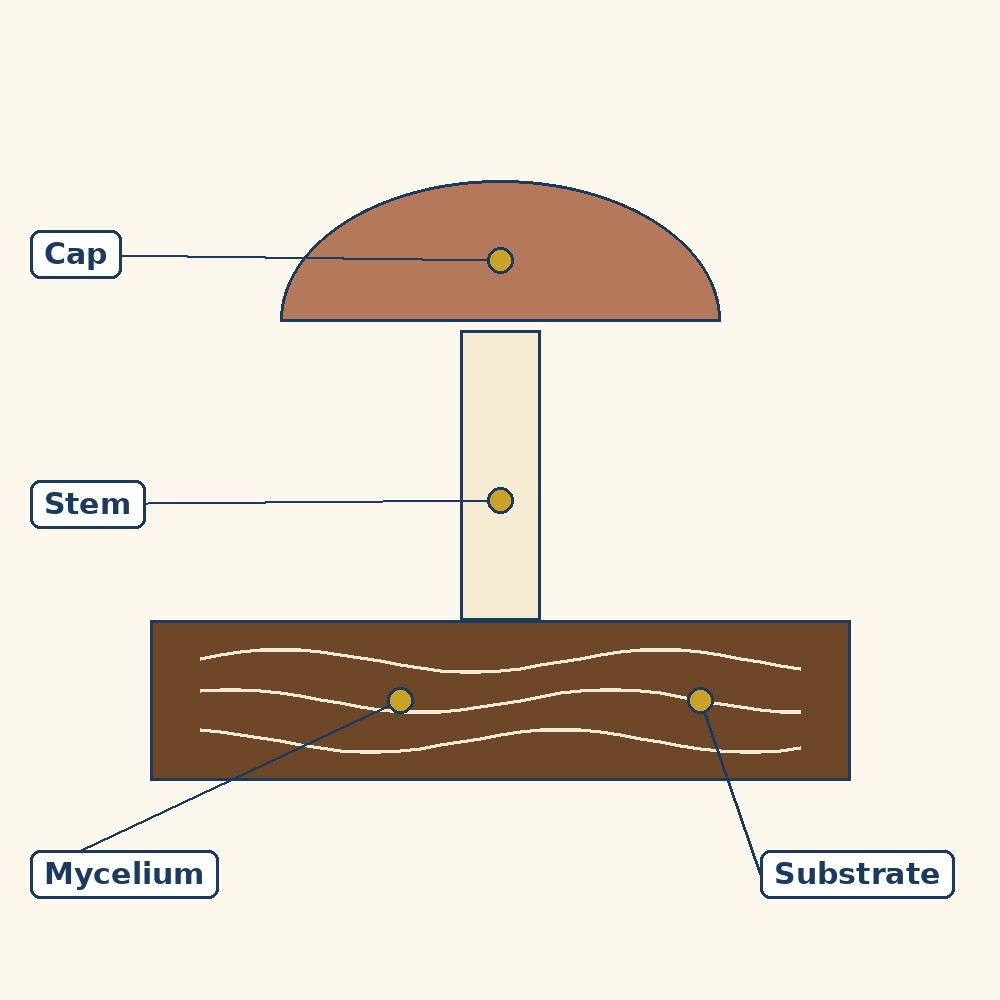
Diagram (labels are printed on the image): A mushroom: its cap, its stem, and the mycelium network spreading through the substrate below.
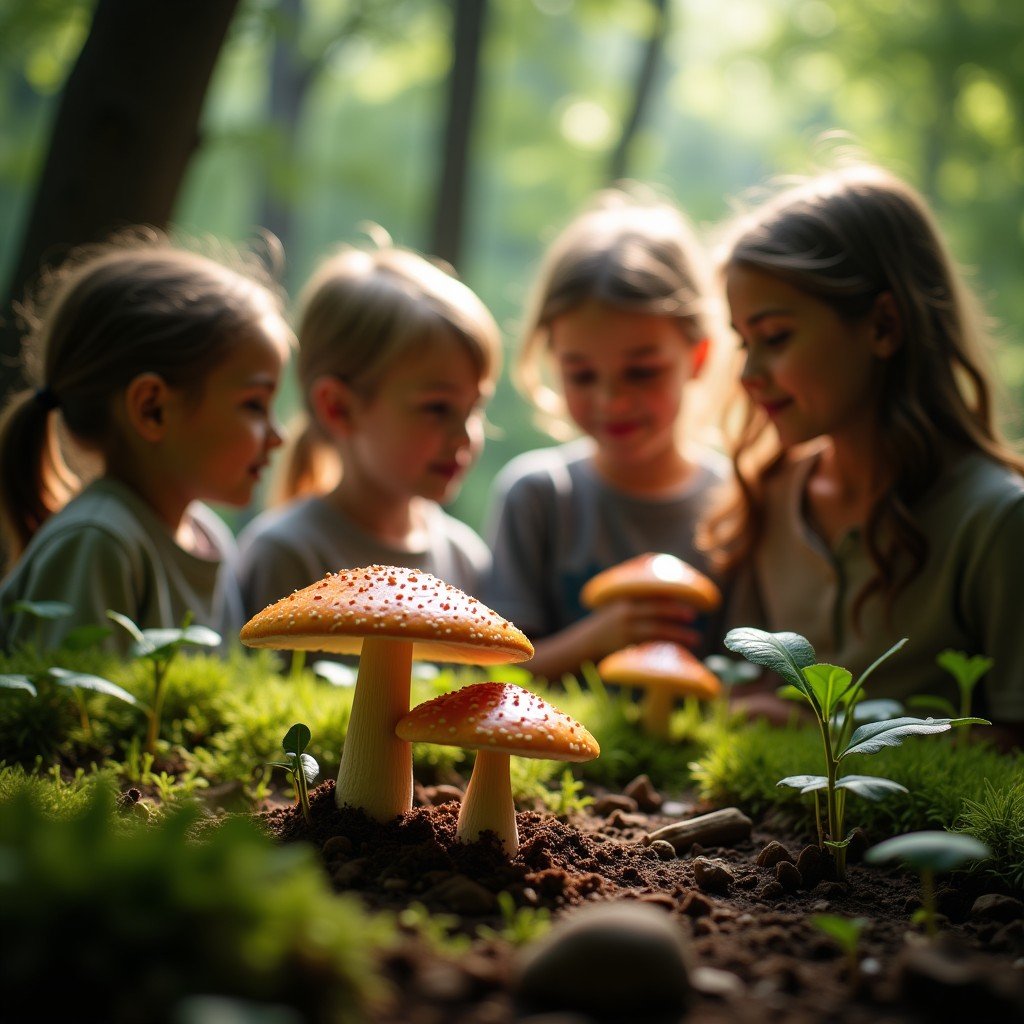
Mushrooms growing in a cultivation unit. A general picture about mushroom cultivation; it is not a scene from the book.
What the chapter is about
This chapter is different from Chapters 2 and 3. Instead of one long project, it gives short, practical guides to five additional vocations in Unit I: mushroom cultivation, aquaponics, pisciculture, backyard poultry and non-timber forest produce (NTFP). Each guide follows the same pattern — keywords, materials, quality parameters, safety parameters and key steps — so you can compare vocations and choose one to explore further. The chapter has no separate “Assess your learning” section; its questions are the choices and checks inside each guide.
The page keeps the chapter’s honest scale: brief guides, not invented full projects. Where the book gives numbers — temperatures, humidity, storage ranges — they are kept exactly; where it gives only a pattern of steps, the page teaches the pattern without adding new claims.
1. Mushroom cultivation
Mushrooms grow from spores, not seeds, and develop through a network called mycelium, which acts like roots to absorb nutrients. The essential conditions are proper temperature, humidity, ventilation and hygiene, recreated in moist, dark and cool environments.
Keywords. Sterilisation (cleaning and removing germs or other organisms from the substrate); mycelium (the root-like network spreading in the substrate); spawn (a substrate that has mycelium in it, acting like a growth initiator, similar to seed); inoculation (adding spawn into a larger sterilised substrate); incubation (providing conditions where the inoculated substrate grows to cover the entire substrate).
Materials. Spawn (seed material); substrate — straw, sawdust or compost (the base medium); gypsum, bran or nutrient additives to enrich the substrate; poly bags or trays; pressure cooker or drum for sterilising; sprayer or mist bottle for moisture; thermometer and hygrometer for temperature and humidity; gloves and masks for hygiene; knife or scissors for cutting straw and harvesting.
Quality and safety. Substrate clean and pasteurised, with no odour or mould; spawn white, fresh and uncontaminated; temperature 25–30°C; humidity 80–90% with good airflow; substrate damp, not soggy; harvest firm white caps, not flattened or brown. Hygiene throughout: clean, pest-free area, no stagnant water, gloves, mask and apron, hands washed before handling, electrical tools kept dry, mild disinfectants only, spent substrate composted. Store cool at 4–8°C in ventilated packs — and grow only known edible varieties.
Key steps. (1) Selection and site design: choose mushrooms per agro-climatic conditions; lay out polybags or trays in a shaded area with ventilation and humidity control. (2) Growth medium preparation: test the medium (pH, soil solution, organic carbon, squeeze test, mycelium growth) and amend; sterilise. (3) Initiating growth: prepare and inoculate spawn; incubate; arrange in containers. (4) Management: set irrigation by the squeeze test; use drip or humidity containers; troubleshoot gaps in sterilisation and conditions; identify pests and use organic pesticides. (5) Monitoring: track humidity, temperature and sunlight; observe height, colour, smell and structure. (6) Harvesting, storage and packing: harvest when caps are fully grown and firm, between flush intervals; use paper bags or refrigeration, avoiding plastic bags.
2. Aquaponics
Aquaponics is a sustainable system that naturally integrates fish (aquaculture) and plant cultivation (hydroponics), growing vegetables and raising fish at the same time. Plants grow without soil, supported in media beds or floating rafts, with proper water quality, oxygen, temperature and light.
Keywords. Nitrogen cycle (bacteria convert fish waste into nutrients for plants); biofilter (beneficial bacteria which purify water); flow rate (the rate at which water moves through the system). Materials. Fish tank, grow beds, tubing, grow media (gravel or clay pellets), pump, aerator, timer switch, seeds or seedlings, fish feed, water testing kit (pH, ammonia, oxygen, temperature).
Quality and safety. Water clear and odour-free; pH slightly acidic to neutral; new leaf growth; fish active and feeding regularly; smooth circulation with no blockages; minimal water use, no chemicals. Keep electric parts dry, wash hands before and after work, wear gloves during cleaning, lift tanks safely, label feed and test kits, avoid overcrowding and handle fish gently.
Key steps. (1) Design: select space; measure, prepare and assemble materials; fabricate tanks, hydroponic beds, pump and timer; select a compatible fish–plant pair. (2) Grow beds: fill with gravel or clay pellets, create a bell siphon for filling and draining, test water quality and amend. (3) Initiate growth: start the nitrogen cycle before full fish load (a few fish or an ammonia additive), introduce beneficial bacteria, transplant seedlings at correct spacing. (4) Manage: track water levels and flow rate, recirculate water, feed fish by weight, ensure drainage and overflow control. (5) Monitor: record plant growth; watch fish behaviour for disease or stress. (6) Harvest plants at maturity (colour, shape, leaf maturity) and record yield.
3. Pisciculture
Fish grow in water systems, and their health depends on clean water, appropriate temperature, dissolved oxygen and regular feeding. Fish are naturally farmed in rivers and ponds across many states, and suitable conditions can also be created in controlled environments.
Keywords. Aeration (adding air or oxygen to water to help fish stay healthy); plankton (tiny plants and animals floating in water that serve as natural food for fish); spawn (newly hatched baby fish); juveniles (young fish older and stronger than spawn). Materials. Pond or tank, nets, feeding trays, buckets, lime and organic manure (to improve pond soil and water quality), aerator, pipes, water testing kit, fish feed.
Quality and safety. Pond base cleaned, lime and manure applied correctly; water clear with no foul odour; fish active and feeding regularly; no deformity or signs of disease at harvest; storage cool and hygienic. Wear gloves and non-slippery footwear, use chemicals carefully in correct doses, handle fish gently without injury to fingerlings, avoid overcrowding, maintain aerators and electrical lines against shocks.
Key steps. (1) Layout: select site, measure and assemble materials, remove weeds, ensure inlet and outlet. (2) Pond preparation: fill clean water, test pH, dissolved oxygen, temperature, ammonia and nitrite, and amend. (3) Initiate growth: add cow dung slurry or manure before fish to stimulate natural plankton (starter food), then introduce spawn or older juveniles by size. (4) Manage: feed rice bran and vegetables like kale and spinach twice daily, use feeding trays to observe feeding, avoid overfeeding (it leads to ammonia), remove debris. (5) Monitor: sample with nets every 2 weeks, measure average weight, adjust feed, watch behaviour, feeding response and stress or disease signs. (6) Harvest at marketable size with nets or by draining, refrigerate, and sort by size and quality.
4. Backyard poultry
Poultry farming does not need large spaces: it can be managed in small spaces like home courtyards, verandas or simple sheds from locally available materials. Well-being depends on suitable housing, balanced feed, clean drinking water and protection from predators, with proper ventilation, warmth for young chicks, coop hygiene and regular health checks.
Keywords. Coop (a small shelter or house where chickens are kept safe and protected); brooder (a special warm house for very young chicks); feeding response (how actively and eagerly chicks eat their food, showing their health); E. coli (bacteria found in contaminated water, causing sickness in humans and chickens); wet bedding (damp litter on the floor that must be removed to prevent disease).
Materials. Nesting boxes (clean, protected space for laying eggs), bedding material (keeps the coop dry and comfortable), fencing or mesh, feed (grains, mash, kitchen greens), cleaning tools, health kit (cleaning, parasite control, minor illnesses), lighting bulb or solar lamp (safety; improves laying in winter).
Quality and safety. Birds active, with clean eyes, good appetite and normal droppings; eggs clean-shelled, well-shaped and consistent in size; feed fresh, dry and balanced with no mould; water clean and changed daily; housing dry, ventilated and predator-proof. Strong fencing, secure doors and raised floor; gentle handling; separation of aggressive or sick birds; feed in closed containers; regular cleaning, dry bedding and low ammonia smell; safe disposal of waste and dead birds; limited outsider entry.
Key steps. (1) Layout: clean, dry site, cleared of debris; coop elevated if possible to avoid waterlogging; jute-sac walls; rice husk or sawdust litter; brooder from a cardboard or wooden box with a bulb, water bowl and sawdust. (2) Prepare the coop: fresh water and feed, ventilation, sunlight, predator barriers, water testing for E. coli. (3) Introduce clean, disinfected chicks and maintain temperature. (4) Manage: clean regularly, replace drinking water, remove wet bedding, feed as required. (5) Monitor: chick activity, feeding response, illness signs, eggs per bird. (6) Harvest: collect eggs gently and store cool; handle mature chickens safely for transport.
5. Non-timber forest produce (NTFP)
NTFP includes a wide variety of natural products — honey, medicinal plants, resins, gums, fruits, seeds, leaves and bamboo — that support nutrition, health and livelihoods without cutting down trees. Most collection happens in natural forest conditions, while processing steps like drying, sorting or extraction can be carried out in community spaces.
Keywords. Sustainable (using natural resources carefully so they can continue to grow and be available in future); lac (a natural resin produced by a tiny insect living on certain trees like ber and kusum; it hardens on branches and is collected for varnish, toys, dyes and polishes); mulching (covering soil with dry leaves, straw, grass or plastic sheets to protect it and help plants grow better).
Materials. Collection basket or bag, sickle or hand pruner, knife or blade, gloves, storage jars or containers, sieves. Quality and safety. Tools clean, sharp and safe; collection site unpolluted with no chemical exposure; leaves, seeds, gums, resins or flowers at the right maturity stage; sustainable harvesting — no uprooting, partial collection, no damage to host trees; clean handling with debris removed and gloves worn. Wear gloves and proper footwear, handle sickles and knives carefully and store them safely, avoid disturbing wildlife, keep drying areas away from open flames.
Key steps. (1) Selection of area: identify the NTFP; choose a safe, accessible forest area with sustainable practices and minimal disturbance. (2) Maintain the growth medium: soil testing (texture, moisture), meteorological data, sunlight availability. (3) Manage the host: clean around the area, remove plastic waste and spoiled produce, protect from human activities, mulch or add leaf-litter compost. (4) Monitor: track health, stress signs, pests and maturity stage. (5) Harvest, pack and store: use tools safely for the targeted parts (leaves, seeds, twigs for lac), clean the harvest (sort, remove dirt, dry), store in cloth bundles and pack airtight or in cardboard boxes.
Chart / Table: Five vocations at a glance
| Vocation | Core idea | Key number or rule |
|---|---|---|
| Mushroom cultivation | Spores → mycelium → fruiting bodies | 25–30°C; humidity 80–90%; store at 4–8°C |
| Aquaponics | Fish waste feeds plants; plants clean water | pH slightly acidic to neutral; no overcrowding |
| Pisciculture | Fish in ponds or tanks | Feed twice daily; sample every 2 weeks |
| Backyard poultry | Small-space chicken rearing | Dry, ventilated, predator-proof coop; water changed daily |
| NTFP | Forest products without cutting trees | Partial collection only; never uproot |
Key Terms
- Mycelium — The root-like network through which a mushroom absorbs nutrients.
- Spawn — Substrate carrying mycelium; the “seed material” for mushroom growth.
- Substrate — The base medium mushrooms grow in: straw, sawdust or compost.
- Sterilisation — Cleaning and removing germs from the substrate before inoculation.
- Inoculation — Adding spawn into a larger sterilised substrate.
- Incubation — The period when inoculated substrate grows to cover the whole medium.
- Nitrogen cycle — Bacteria converting fish waste into nutrients plants can use.
- Biofilter — Beneficial bacteria that purify water in an aquaponics system.
- Aeration — Adding air or oxygen to water to keep fish healthy.
- Plankton — Tiny floating plants and animals that are natural food for fish.
- Juveniles — Young fish, older and stronger than newly hatched spawn.
- Brooder — A warm house for very young chicks.
- NTFP — Non-Timber Forest Produce: honey, lac, medicinal plants, resins, gums, fruits, seeds, leaves, bamboo.
- Lac — Natural resin from a tiny insect on ber and kusum trees, used for varnish, toys, dyes and polishes.
Remember
- Mushrooms: spores, not seeds; mycelium, spawn, sterilisation, inoculation, incubation.
- Mushroom conditions: 25–30°C, 80–90% humidity, good airflow, damp — never soggy — substrate.
- Aquaponics: fish + plants + bacteria; the nitrogen cycle feeds plants and cleans water.
- Pisciculture: clean water, oxygen, twice-daily feeding, no overfeeding (ammonia), sampling every 2 weeks.
- Poultry: dry, ventilated, predator-proof coop; watch feeding response; remove wet bedding at once.
- NTFP: take only part, never uproot, never damage the host tree — sustainability is the rule, not a bonus.
Exam Tip / Common Mistake
Common mistake: mixing up spawn and seed. Spawn is mycelium-carrying substrate, not a seed — and mushrooms grow from spores, not seeds. Examiners test exactly this distinction, so state it in those words.
- Five brief guides: mushrooms, aquaponics, pisciculture, backyard poultry and NTFP.
- Mushrooms need 25–30°C, 80–90% humidity, sterile substrate and known edible varieties only.
- Aquaponics runs on the nitrogen cycle: fish waste becomes plant food via a biofilter.
- Fish and poultry both reward routine: measured feeding, clean water, and fortnightly or daily checks.
- NTFP livelihoods depend on restraint: partial collection, no uprooting, no host-tree damage.
Practice set — try it yourself
- Why is spawn called “seed material” but not a seed?
Hint: What grows — a plant from a seed, or a fungus from mycelium? - List the six key steps of mushroom cultivation in order.
Hint: Site, medium, inoculation, management, monitoring, harvest. - What does a biofilter do in aquaponics?
Hint: Bacteria, waste, nutrients — in that order. - What is feeding response, and why do poultry keepers watch it?
Hint: Eager eating is a health signal. - Give two rules of sustainable NTFP collection.
Hint: Partial collection, and what you must never do to the host tree.
Questions with Answers
- How do mushrooms grow, and what conditions do they need?
From spores, through a mycelium network that absorbs nutrients like roots do. They need a moist, dark, cool environment: temperature 25–30°C, humidity 80–90% with good airflow, a clean pasteurised substrate that is damp but not soggy, and strict hygiene. - What are spawn, substrate, inoculation and incubation?
Spawn is substrate carrying mycelium — the seed material. Substrate is the base medium (straw, sawdust or compost). Inoculation adds spawn to a larger sterilised substrate. Incubation provides the conditions for the inoculated substrate to grow until mycelium covers it entirely. - How does aquaponics work?
Fish and plants share one recirculating system: fish waste is converted by bacteria (the nitrogen cycle, in the biofilter) into nutrients for plants, which grow without soil in media beds or floating rafts, while the plants help keep the water clean. Water must stay clear and odour-free, slightly acidic to neutral, with smooth flow and no overcrowding. - What are the key routines in pisciculture and backyard poultry?
Pisciculture: prepare the pond with lime and manure, stimulate plankton before stocking, feed rice bran and vegetables twice daily from feeding trays, never overfeed (it causes ammonia), and sample with nets every 2 weeks to adjust feed. Poultry: keep the coop dry, ventilated and predator-proof, change water daily, remove wet bedding, and watch activity, feeding response and eggs per bird. - What is NTFP, and why must its collection be sustainable?
Non-Timber Forest Produce: honey, medicinal plants, resins, gums, fruits, seeds, leaves and bamboo — products that support nutrition, health and livelihoods without cutting trees. Collection must be partial, at the right maturity, without uprooting or damaging host trees, so the resource keeps growing for the future.
Extension Questions with Answers
- A mushroom room is at 35°C with puddles on the substrate. Diagnose the problems and suggest fixes.
Temperature is above the 25–30°C range and the substrate is soggy, not damp — both invite contamination and poor fruiting. Fix: cool and ventilate the room, drain excess water, and judge moisture by the squeeze test; re-check sterilisation, since gaps there compound both problems. - In an aquaponics unit, fish gasp at the surface and plants yellow. What would you check first?
Water quality and flow: ammonia, oxygen and pH with the testing kit, plus pump circulation and blockages. Gasping points to low oxygen or ammonia (often from overfeeding or a failing biofilter), and yellowing plants point to the same nutrient-cycle breakdown — fix water and flow before adding anything else. - A poultry keeper finds wet bedding and dull, poorly eating chicks. What actions follow?
Remove wet bedding at once, restore dry litter, check water for contamination (including E. coli risk), ventilation and warmth in the brooder, and separate any sick birds. Feeding response is the early warning: dull appetite plus wet bedding means disease risk, not just discomfort. - Why is “take everything you find” wrong for lac collection on kusum trees?
Because lac depends on living host trees and insect populations: stripping branches or damaging hosts destroys future yields. Sustainable practice takes only mature lac partially, leaves the host healthy, and protects the insects that produce the next crop. - You have a small courtyard and want a Unit I vocation. Compare mushroom cultivation and backyard poultry for your space.
Mushrooms need a small, dark, cool, humid indoor space and strict hygiene, with no noise or outdoor area; poultry needs a dry, ventilated, predator-proof coop, daily water and feed, and waste disposal, plus tolerance for smell and sound. The choice turns on indoor versus outdoor space, daily labour, and what your household will actually maintain.
How to use this page: Read the summary, say the Key Terms in your own words, then try the practice set without looking. Use the Questions with Answers to check yourself afterwards. Ask your teacher or parent to check your answers.