

Original notes — ready
Chapter 9: Rhythms of Nature
CBSE (NCERT, English Medium) • Class 5 • The World Around Us (EVS) • Book: Our Wondrous World
Rhythms of Nature — EG's own notes, in simple words
Book: Our Wondrous World (CBSE, Class 5) | Chapter 9 | Medium: English
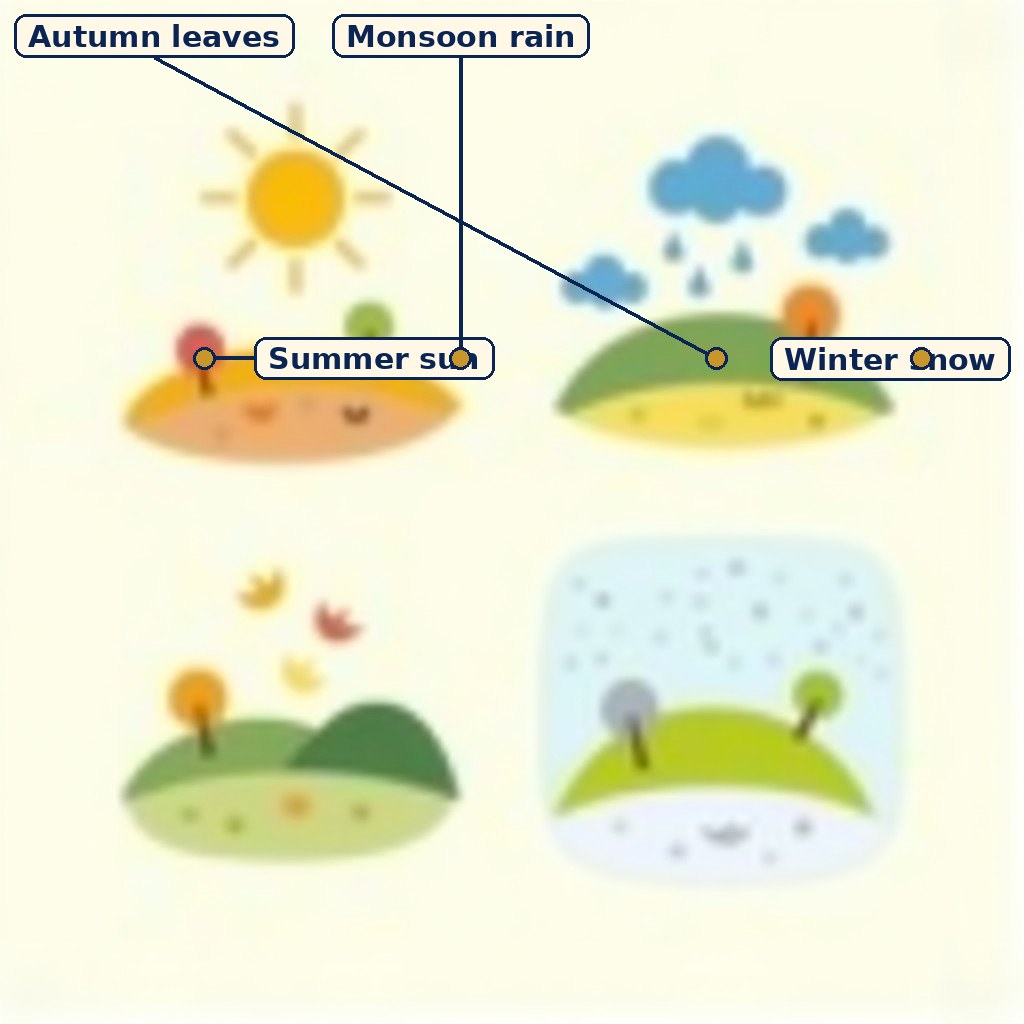
Diagram (labels are printed on the image): Four seasons: summer, monsoon, autumn, winter. A general teaching picture about nature's rhythms.
Migratory birds in flight. A general picture about seasonal rhythms.
What the chapter is about
Nature moves in rhythms: day follows night, seasons follow seasons, tides rise and fall, and birds migrate at fixed times of the year. A rhythm is a pattern that repeats.
The Earth spinning gives us day and night; the Earth travelling around the sun gives us seasons. Summer, monsoon, autumn, winter and spring return every year in order.
Living things follow these rhythms: farmers sow with the monsoon, animals store food before winter, and birds fly thousands of kilometres to warmer places and back.
People also live by rhythms. We wake and sleep each day, schools open and close each year, and farmers sow and harvest with the seasons. When we follow nature's rhythms, our work becomes easier and our bodies stay healthier.
What you should learn
Link each rhythm to its cause: day/night → Earth's spin; seasons → Earth's journey around the sun; tides → the moon's pull.
Key Terms
- Rhythm — A pattern that repeats regularly.
- Season — A part of the year with its own weather.
- Migration — Birds travelling far for the season.
- Tide — The regular rise and fall of sea water.
- Monsoon — The rainy season in India.
- Harvest — The gathering of ripe crops from the fields.
Remember
- Day/night: Earth spins.
- Seasons: Earth goes around the sun.
- Tides: the moon pulls the sea.
- Farmers and animals follow nature's rhythms.
Exam Tip / Common Mistake
Common mistake: saying seasons come from the Earth moving closer to the sun. Seasons come from the Earth's tilt as it travels around the sun.
Chart / Table: Nature's rhythms
| Rhythm | Cause |
|---|---|
| Day and night | Earth spins |
| Seasons | Earth travels around the sun |
| Tides | Moon's pull |
| Bird migration | Seasonal change |
Think and try
Make a small wheel of the year: summer, monsoon, autumn, winter, spring. For each season, write one thing farmers do and one thing birds or animals do. Which season changes your own daily life most?
Practice set — try it yourself
- Why do we have day and night?
Hint: Think about Earth's spin. - Why do seasons change?
Hint: Think about Earth's journey and tilt. - What is bird migration?
Hint: Think about seasonal travel. - Name the seasons in order.
Hint: Think about summer to spring. - How do farmers follow nature's rhythm?
Hint: Think about sowing with monsoon.
How to use this page: Read the summary, say the Key Terms in your own words, then try the practice set without looking. Ask your teacher or parent to check your answers.