

Original notes — ready
Chapter 8: Clothes: How Things are Made
CBSE (NCERT, English Medium) • Class 5 • The World Around Us (EVS) • Book: Our Wondrous World
Clothes: How Things are Made — EG's own notes, in simple words
Book: Our Wondrous World (CBSE, Class 5) | Chapter 8 | Medium: English
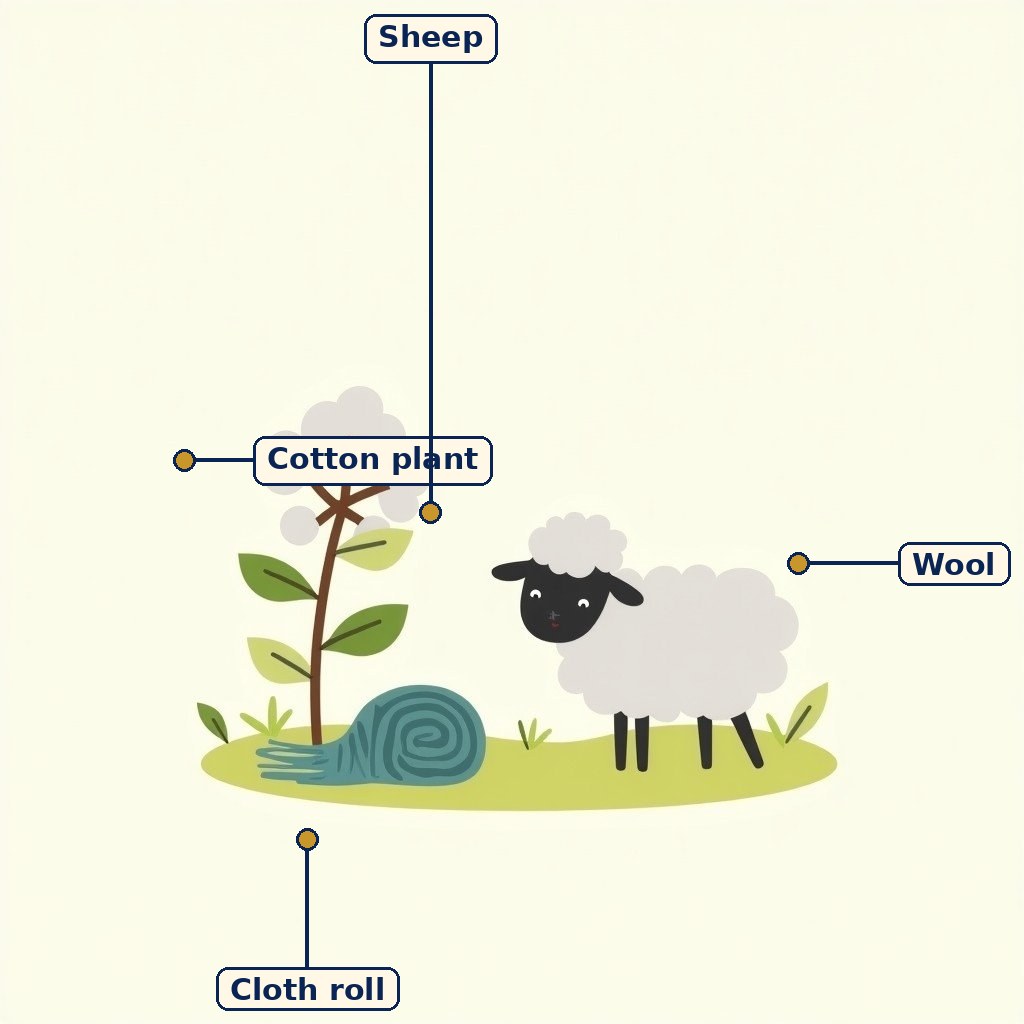
Diagram (labels are printed on the image): Cotton plant, sheep with wool, and a roll of cloth. A general teaching picture about fibres; the silk cocoon is not shown in this picture.
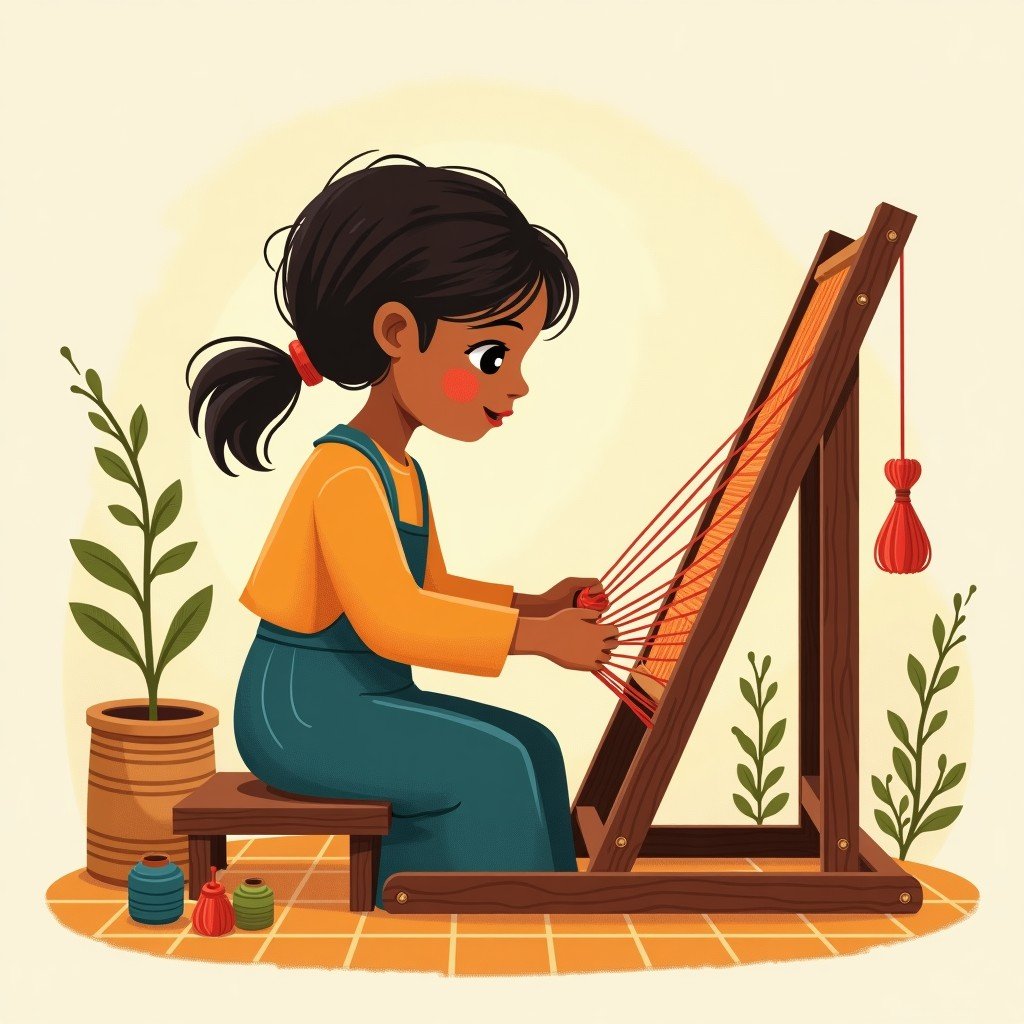
A weaver at a handloom. A general picture about making cloth.
What the chapter is about
Clothes begin as fibres: cotton comes from the cotton plant, wool from sheep, silk from silkworms, and synthetic fibres like nylon are made in factories.
The journey is long: fibre → yarn (spinning) → cloth (weaving) → stitching into clothes. A cotton kurta starts in a field and passes through many hands before it reaches a shop.
Different places need different clothes: woollen clothes in cold Kashmir, light cotton in hot Tamil Nadu, and raincoats in rainy Cherrapunji. Clothes protect us and show our culture too.
Clothes also tell us about work and weather. A fisherman needs clothes that dry quickly, a driver needs a cap against the sun, and a dancer needs clothes that move freely. What we wear always answers the needs of our life and place.
What you should learn
Remember the chain: fibre → yarn → cloth → clothes. Every 'how things are made' question follows this chain.
Key Terms
- Fibre — A thin thread-like strand; cloth begins here.
- Yarn — Thread spun from fibres.
- Weaving — Crossing yarns to make cloth.
- Cotton — Soft fibre from the cotton plant.
- Wool — Warm fibre from sheep hair.
- Loom — A machine or frame used to weave yarn into cloth.
Remember
- Fibre → yarn → cloth → clothes.
- Cotton: plant; wool: sheep; silk: silkworm.
- Nylon is a factory-made fibre.
- Clothes suit the climate and show culture.
Exam Tip / Common Mistake
Common mistake: skipping the yarn step. The chain has four steps, not three: fibre, yarn, cloth, clothes.
Chart / Table: From fibre to clothes
| Step | What happens |
|---|---|
| 1. Fibre | Cotton, wool, silk collected |
| 2. Spinning | Fibre becomes yarn |
| 3. Weaving | Yarn becomes cloth |
| 4. Stitching | Cloth becomes clothes |
Think and try
Look at the label or feel of your shirt: is it cotton, wool or synthetic? How can you tell? Write two clues — how it feels, and how it suits hot or cold weather.
Practice set — try it yourself
- Where does cotton come from?
Hint: Think about a plant. - Write the chain from fibre to clothes.
Hint: Four steps in order. - Why do Kashmiris wear wool?
Hint: Think about cold climate. - Name one natural and one factory-made fibre.
Hint: Think about cotton and nylon. - Why does silk cost more than cotton?
Hint: Think about silkworms and slow work.
How to use this page: Read the summary, say the Key Terms in your own words, then try the practice set without looking. Ask your teacher or parent to check your answers.