
Original notes — ready
Chapter 7: Energy: How Things Work
CBSE (NCERT, English Medium) • Class 5 • The World Around Us (EVS) • Book: Our Wondrous World
Energy: How Things Work — EG's own notes, in simple words
Book: Our Wondrous World (CBSE, Class 5) | Chapter 7 | Medium: English
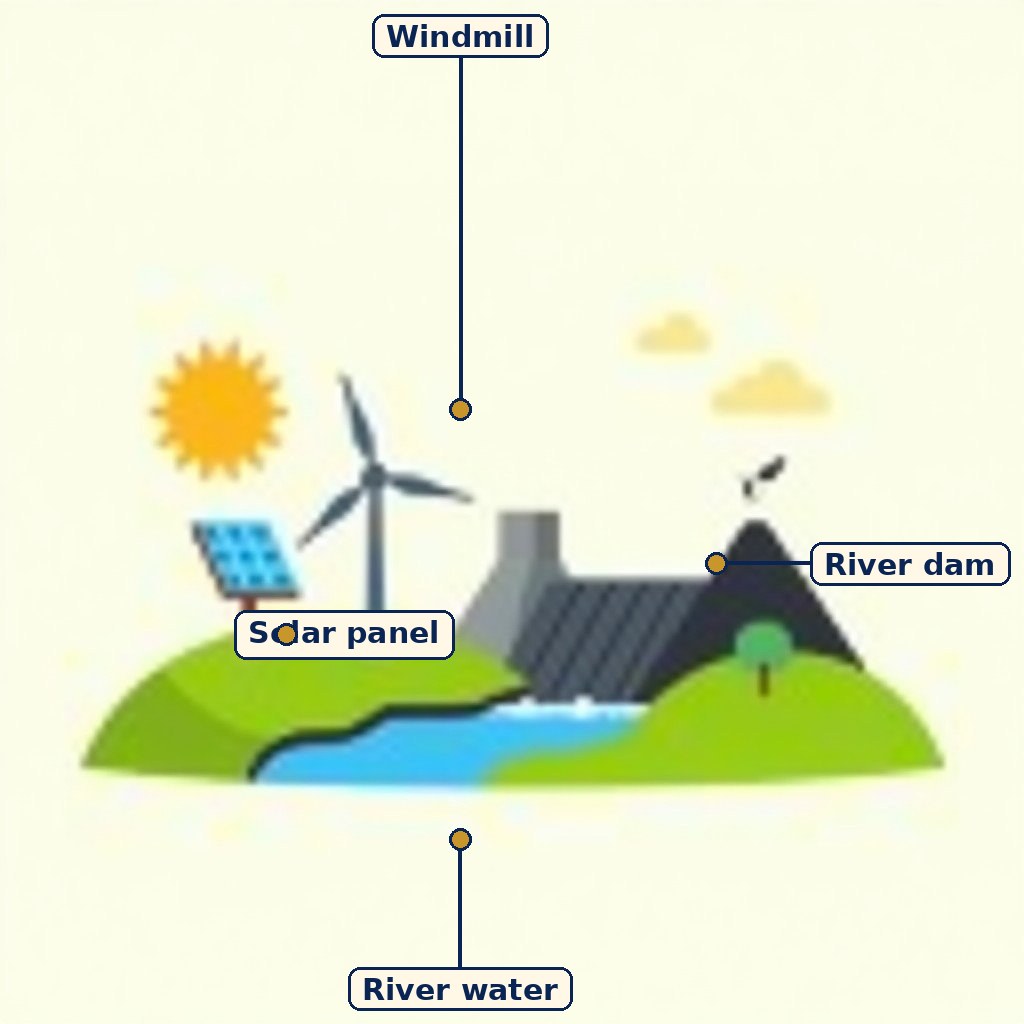
Diagram (labels are printed on the image): Solar panel, windmill, river dam and river water. A general teaching picture about energy sources; coal is not shown in this picture.
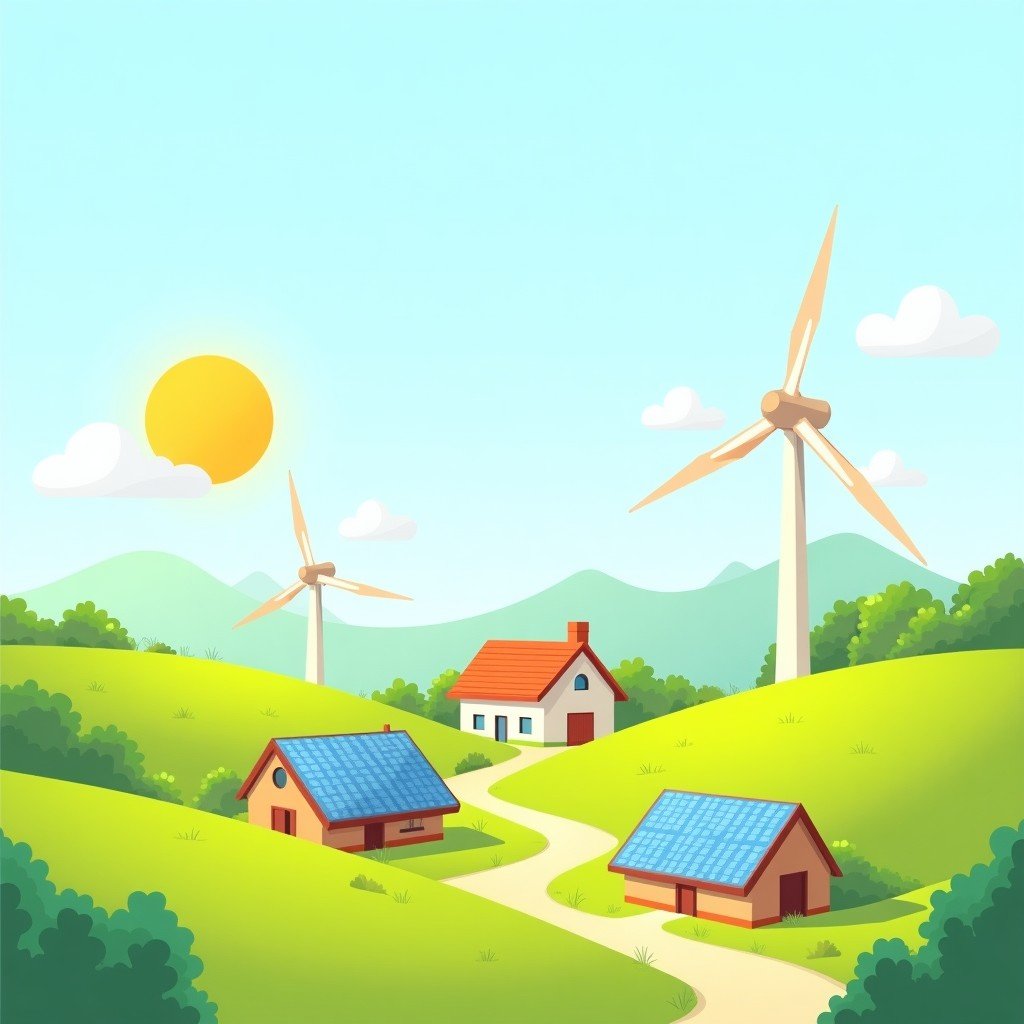
A village using sun and wind energy. A general picture about clean energy.
What the chapter is about
Energy is what makes things work: it moves vehicles, lights bulbs, cooks food and runs machines. We get energy from the sun, wind, water, coal, petrol and food.
Some sources never run out: sunlight, wind and flowing water are renewable. Others, like coal and petrol, take millions of years to form and will finish one day — they are non-renewable.
Saving energy is easy: switch off lights when leaving a room, use sunlight in the day, and walk short distances instead of using a vehicle.
Energy also changes form. Food gives our bodies energy to run, sunlight gives plants energy to grow, and moving water can turn machines that make electricity. Following energy from one form to another is one of science's most useful ideas.
What you should learn
Sort every source into renewable or non-renewable. That one sorting question appears in almost every test on this chapter.
Key Terms
- Energy — The power to do work.
- Renewable — Sources that nature replaces quickly, like sun and wind.
- Non-renewable — Sources that finish one day, like coal and petrol.
- Solar energy — Energy from the sun.
- Wind energy — Energy from moving air.
- Electricity — A form of energy that powers bulbs, fans and machines.
Remember
- Energy makes things work.
- Renewable: sun, wind, water.
- Non-renewable: coal, petrol, diesel.
- Saving energy protects the future.
Exam Tip / Common Mistake
Common mistake: calling petrol renewable. Petrol takes millions of years to form — it is non-renewable.
Chart / Table: Energy sources
| Source | Type |
|---|---|
| Sunlight | Renewable |
| Wind | Renewable |
| Flowing water | Renewable |
| Coal | Non-renewable |
| Petrol | Non-renewable |
Think and try
Walk through your home and count things that use electricity. How many can you switch off right now without any harm? Try it for one evening and note what changed.
Practice set — try it yourself
- What is energy?
Hint: Think about power to do work. - Name two renewable and two non-renewable sources.
Hint: Think about sun/wind vs coal/petrol. - Why is sunlight renewable?
Hint: Think about daily renewal. - Write three ways to save electricity at home.
Hint: Think about switching off and sunlight. - Why should we save non-renewable sources?
Hint: Think about them finishing one day.
How to use this page: Read the summary, say the Key Terms in your own words, then try the practice set without looking. Ask your teacher or parent to check your answers.