

Original notes — ready
Chapter 6: Some Unique Places
CBSE (NCERT, English Medium) • Class 5 • The World Around Us (EVS) • Book: Our Wondrous World
Some Unique Places — EG's own notes, in simple words
Book: Our Wondrous World (CBSE, Class 5) | Chapter 6 | Medium: English
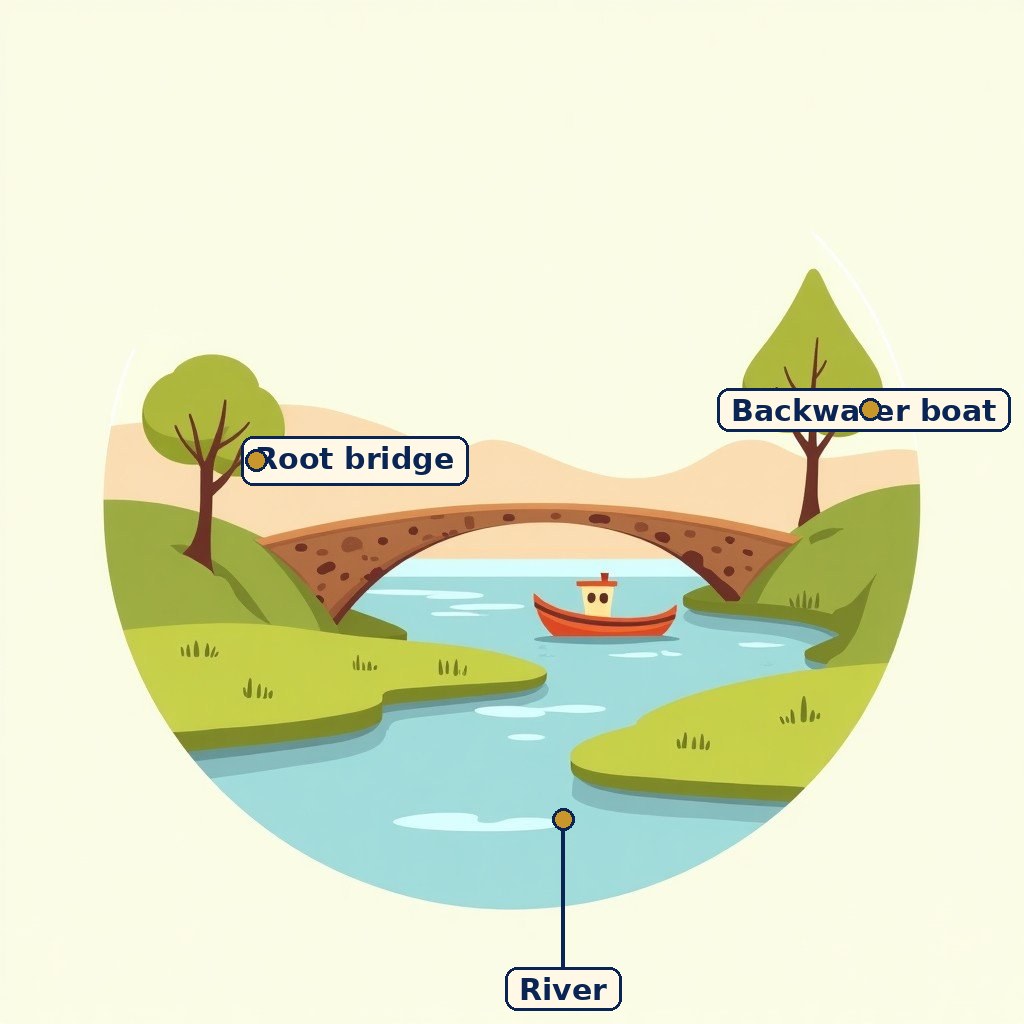
Diagram (labels are printed on the image): A root bridge and a backwater boat over a river. A general teaching picture about unique places; the salt desert is not shown in this picture.
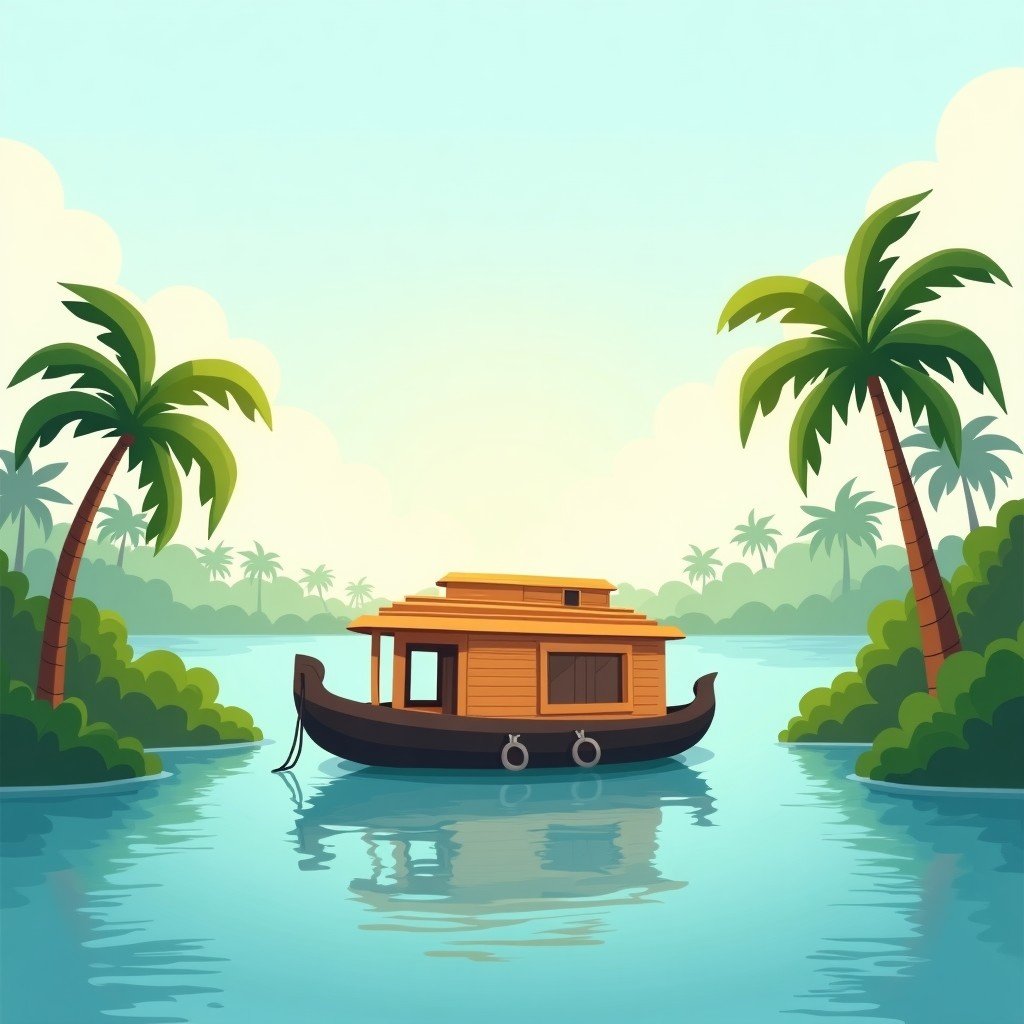
A houseboat on Kerala's backwaters. A general picture about unique places.
What the chapter is about
India has many unique places: the floating gardens of Kashmir's Dal Lake, the living root bridges of Meghalaya, the white salt desert of Kutch, and the backwaters of Kerala.
Each place is special because of its nature and its people. In Meghalaya, people grow bridges from tree roots over many years. In Kutch, the ground shines white with salt after the rains.
The chapter teaches us to protect unique places: they cannot be rebuilt once damaged. Visiting responsibly — without littering or harming nature — keeps them beautiful.
Unique places need special care because their beauty depends on delicate balance. If a root bridge is cut, it takes years to grow again; if a lake is dirtied, its floating gardens suffer. Responsible visitors leave only footprints behind.
What you should learn
For each place, remember one special feature: Dal Lake = floating gardens; Meghalaya = root bridges; Kutch = salt desert; Kerala = backwaters.
Key Terms
- Unique — One of a kind; special.
- Floating garden — A garden on a floating bed of plants, in Dal Lake.
- Root bridge — A bridge grown from living tree roots.
- Backwaters — Calm lagoons and canals along the Kerala coast.
- Salt desert — The white Rann of Kutch, covered with salt.
- Responsible visitor — A visitor who enjoys a place without littering or harming its nature and people.
Remember
- Dal Lake: floating gardens.
- Meghalaya: living root bridges.
- Kutch: white salt desert.
- Kerala: backwaters.
- Unique places must be protected.
Exam Tip / Common Mistake
Common mistake: mixing up the places. Link each feature to its place: roots → Meghalaya, salt → Kutch, boats and water → Kerala.
Chart / Table: Unique places and their speciality
| Place | Speciality |
|---|---|
| Dal Lake, Kashmir | Floating gardens |
| Meghalaya | Living root bridges |
| Rann of Kutch | White salt desert |
| Kerala | Backwaters |
Think and try
Choose one unique place from this chapter. Write three rules a visitor should follow there. Which rule matters most, and what would happen if visitors ignored it?
Practice set — try it yourself
- Where are living root bridges found?
Hint: Think about Meghalaya. - What is special about Dal Lake?
Hint: Think about floating gardens. - Describe the Rann of Kutch.
Hint: Think about white salt. - Why must unique places be protected?
Hint: Think about damage that cannot be undone. - Which unique place would you like to visit, and why?
Hint: Start with the place, then its speciality.
How to use this page: Read the summary, say the Key Terms in your own words, then try the practice set without looking. Ask your teacher or parent to check your answers.