

Original notes — ready
Chapter 5: Our Vibrant Country
CBSE (NCERT, English Medium) • Class 5 • The World Around Us (EVS) • Book: Our Wondrous World
Our Vibrant Country — EG's own notes, in simple words
Book: Our Wondrous World (CBSE, Class 5) | Chapter 5 | Medium: English
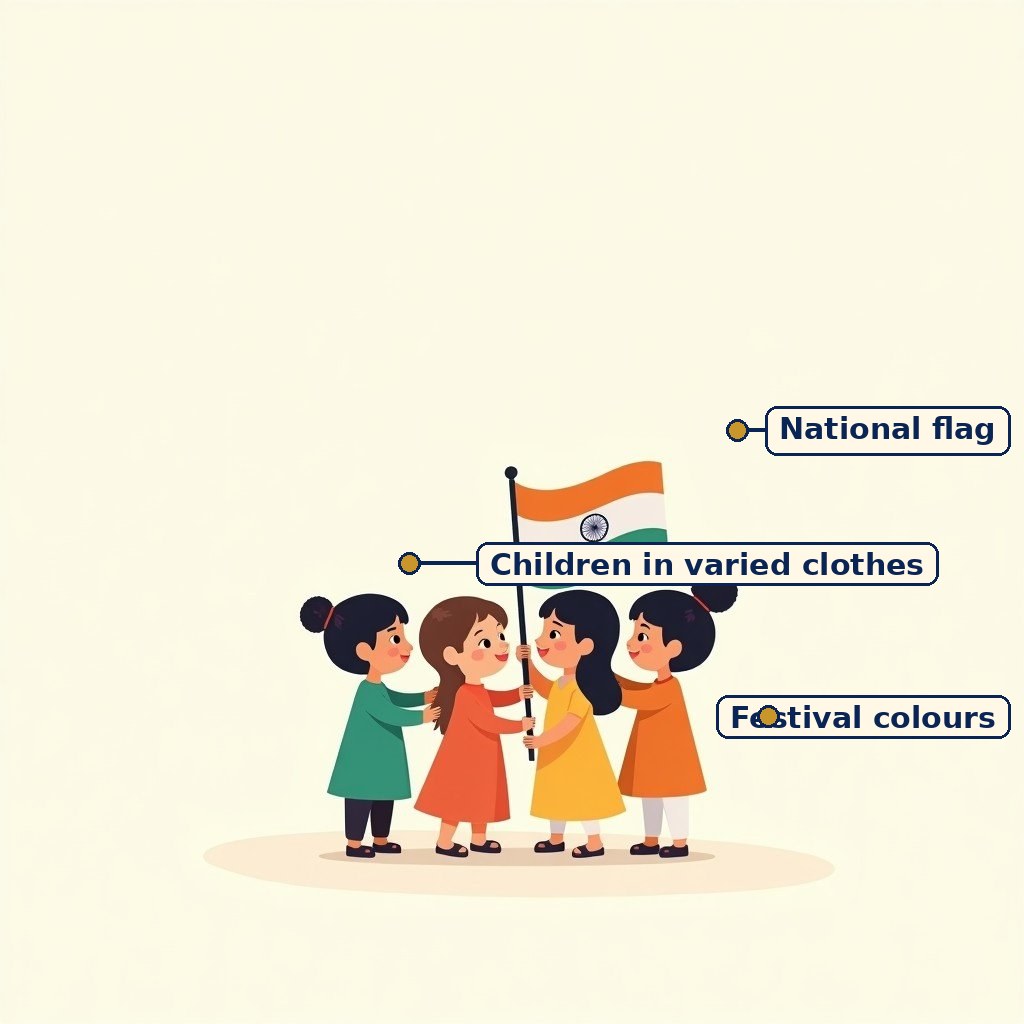
Diagram (labels are printed on the image): Children in different traditional clothes with the flag. A general picture about unity in diversity.
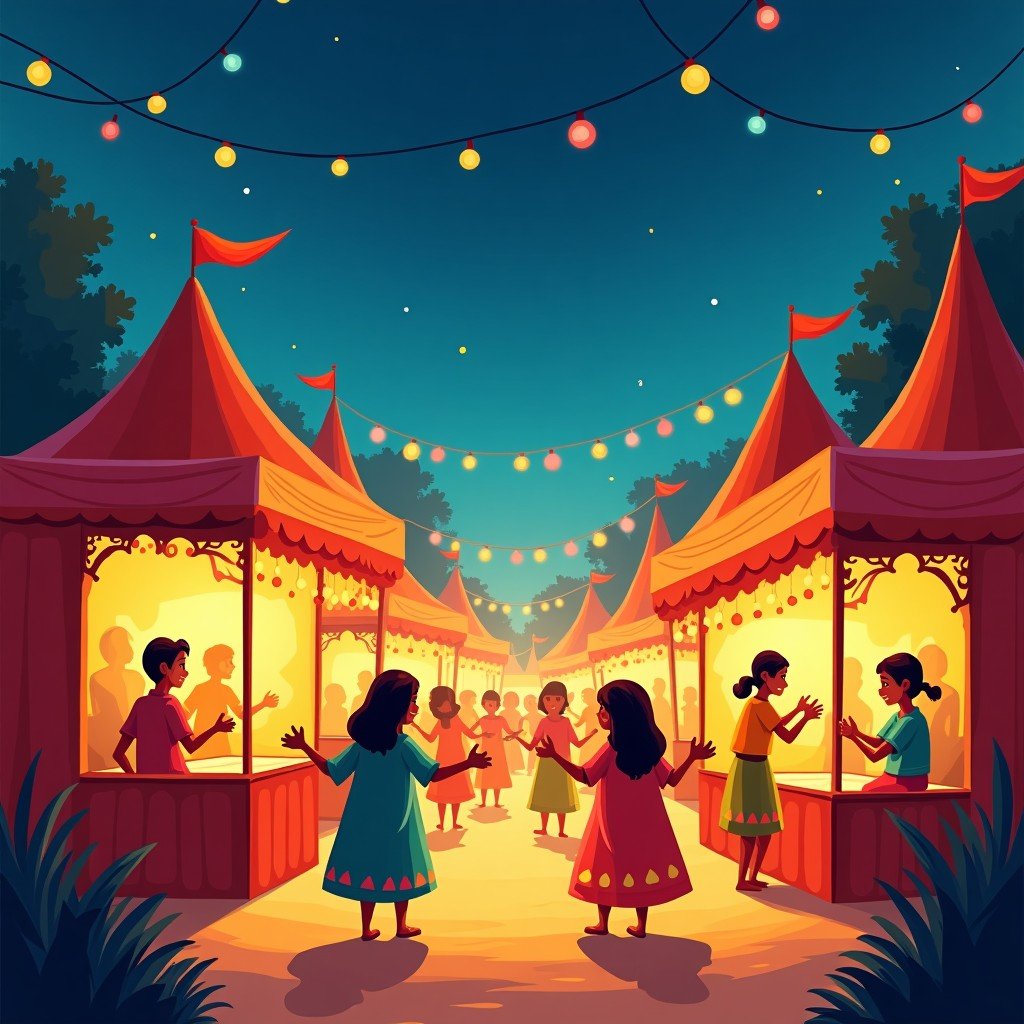
A colourful Indian fair. A general picture about our vibrant country.
What the chapter is about
India is a vibrant country: many languages, many festivals, many foods, many clothes — yet one nation. From Kashmir to Kanyakumari, people live differently but share one flag, one Constitution and one identity as Indians.
Our country has great natural variety too: snowy Himalayas, the Thar desert, green plains, long coastlines and dense forests. Each region grows different crops and celebrates different festivals.
The chapter teaches unity in diversity: differences make India colourful, and respect for all cultures keeps the country strong.
India's variety also comes from its long history. Traders, travellers and rulers from many places came here over centuries, and each left something behind — a food, a word, a craft, a festival. That is why Indian culture has so many colours.
What you should learn
Unity in diversity is the key phrase of this chapter. Always give examples: different languages, festivals, foods — one nation.
Key Terms
- Vibrant — Full of life, colour and energy.
- Diversity — Many different kinds of people and cultures.
- Unity — Being one despite differences.
- Constitution — The book of rules that guides our country.
- Festival — A joyful celebration, like Diwali or Eid.
- Heritage — The customs, arts and traditions passed down from earlier generations.
Remember
- India has many languages, festivals and foods.
- Natural variety: mountains, desert, plains, coasts.
- One flag, one Constitution, one nation.
- Unity in diversity keeps India strong.
Exam Tip / Common Mistake
Common mistake: listing only differences. Good answers end with unity — what all Indians share.
Chart / Table: India's variety
| Aspect | Examples |
|---|---|
| Languages | Hindi, Tamil, Bengali, Marathi |
| Festivals | Diwali, Eid, Christmas, Pongal |
| Foods | Dosa, roti, rice, dal |
| Clothes | Saree, kurta, pheran |
Think and try
Ask an elder in your family about one festival food or song from their childhood. How is it the same as yours today, and how is it different? Write two lines about what you learned.
Practice set — try it yourself
- What does 'unity in diversity' mean?
Hint: Think about many cultures, one nation. - Name two festivals and the regions they are famous in.
Hint: Think about Pongal and Bihu. - How is India's nature varied?
Hint: Think about mountains and deserts. - What do all Indians share?
Hint: Think about flag and Constitution. - Describe your state's festival in four lines.
Hint: Start with its name and season.
How to use this page: Read the summary, say the Key Terms in your own words, then try the practice set without looking. Ask your teacher or parent to check your answers.