

Original notes — ready
Chapter 3: The Mystery of Food
CBSE (NCERT, English Medium) • Class 5 • The World Around Us (EVS) • Book: Our Wondrous World
The Mystery of Food — EG's own notes, in simple words
Book: Our Wondrous World (CBSE, Class 5) | Chapter 3 | Medium: English
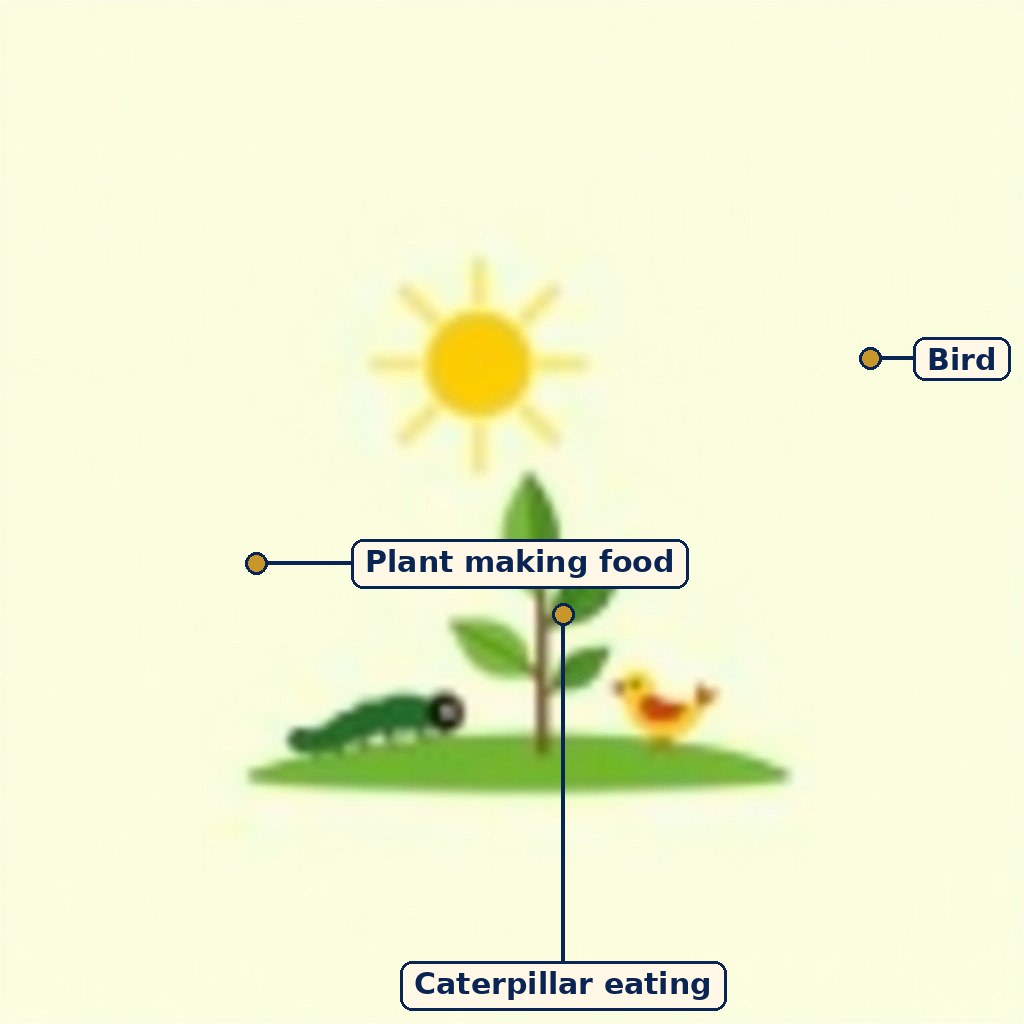
Diagram (labels are printed on the image): A plant, a caterpillar and a bird — a simple food chain. A general teaching picture.
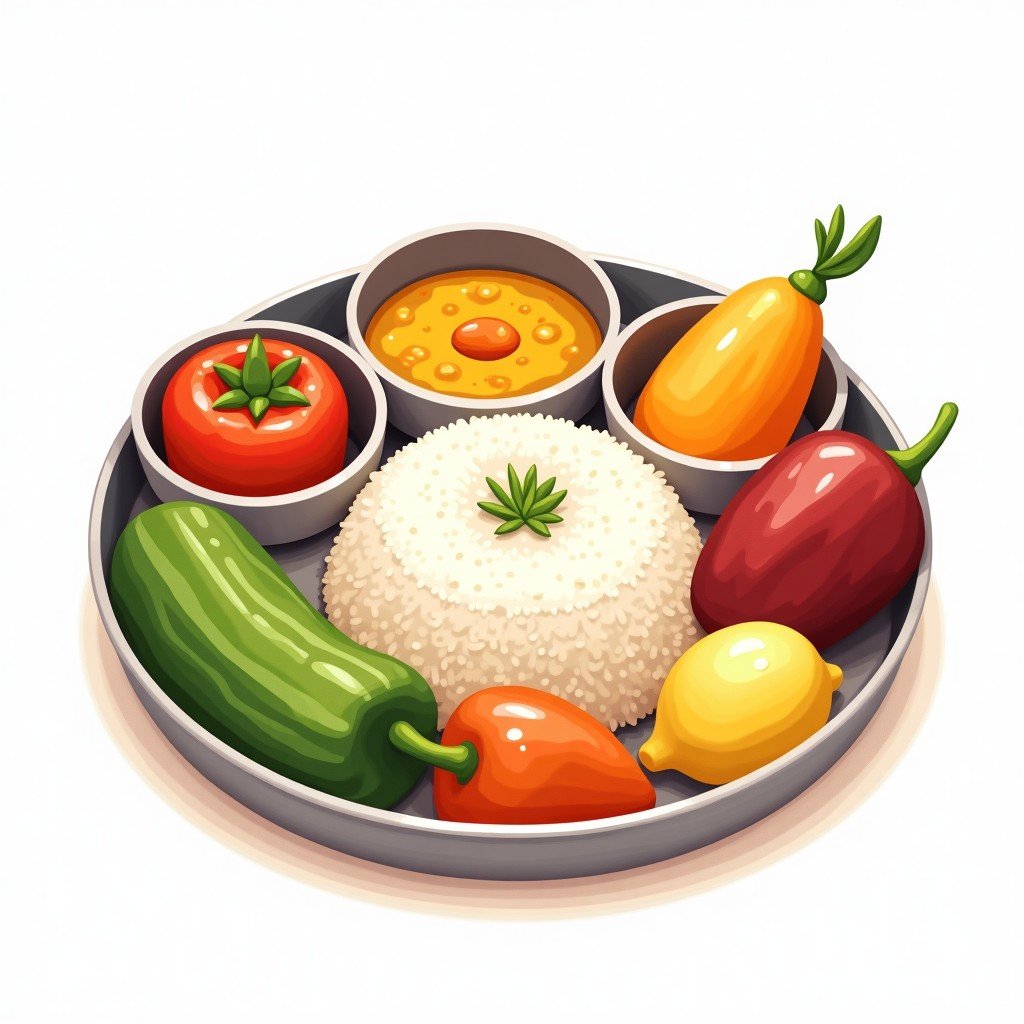
A balanced thali. A general picture about healthy food.
What the chapter is about
Food seems simple, but it hides a mystery: how does a tiny seed become a plant full of grain? How does our body turn food into energy? This chapter explores where food comes from and what it does for us.
Plants make their own food using sunlight, water and air — a process called photosynthesis. Animals and humans eat plants or other animals. That is why every food chain starts with a plant.
Our body needs different foods: energy-giving foods (rice, wheat), body-building foods (milk, pulses, eggs) and protective foods (fruits, vegetables). A balanced diet has all three.
Our body also needs water and roughage, which come from fruits, vegetables and whole grains. A balanced diet is not only about the three food groups — it also needs enough water to drink and fibre to keep digestion healthy.
What you should learn
Learn the three food groups and one example of each. 'Balanced diet' questions almost always ask for examples.
Key Terms
- Photosynthesis — How plants make food from sunlight, water and air.
- Food chain — A series: plant → animal → bigger animal.
- Balanced diet — A diet with all kinds of nutrients.
- Energy-giving foods — Rice, wheat, potato — give strength to work.
- Body-building foods — Milk, pulses, eggs — help us grow.
- Roughage — The fibre in plant foods that helps digestion and keeps the stomach healthy.
Remember
- Plants make food by photosynthesis.
- Every food chain starts with a plant.
- Balanced diet = energy + body-building + protective foods.
- Fruits and vegetables protect us from illness.
Exam Tip / Common Mistake
Common mistake: saying animals make their own food. Only plants do that; animals depend on plants directly or indirectly.
Chart / Table: Three food groups
| Group | Examples |
|---|---|
| Energy-giving | Rice, wheat, potato |
| Body-building | Milk, pulses, eggs |
| Protective | Fruits, green vegetables |
Think and try
Plan tomorrow's lunch with one food from each group plus a fruit. Write it as a thali: energy food, body-building food, protective food. Is your thali balanced? What would you change?
Practice set — try it yourself
- What is photosynthesis?
Hint: Think about sunlight, water and air. - Why does every food chain start with a plant?
Hint: Think about who makes food. - Name one food from each of the three groups.
Hint: Think about rice, milk, apple. - Why do we need protective foods?
Hint: Think about illness and vitamins. - Plan a balanced lunch for yourself.
Hint: Include one food from each group.
How to use this page: Read the summary, say the Key Terms in your own words, then try the practice set without looking. Ask your teacher or parent to check your answers.