

Original notes — ready
Chapter 2: Journey of a River
CBSE (NCERT, English Medium) • Class 5 • The World Around Us (EVS) • Book: Our Wondrous World
Journey of a River — EG's own notes, in simple words
Book: Our Wondrous World (CBSE, Class 5) | Chapter 2 | Medium: English
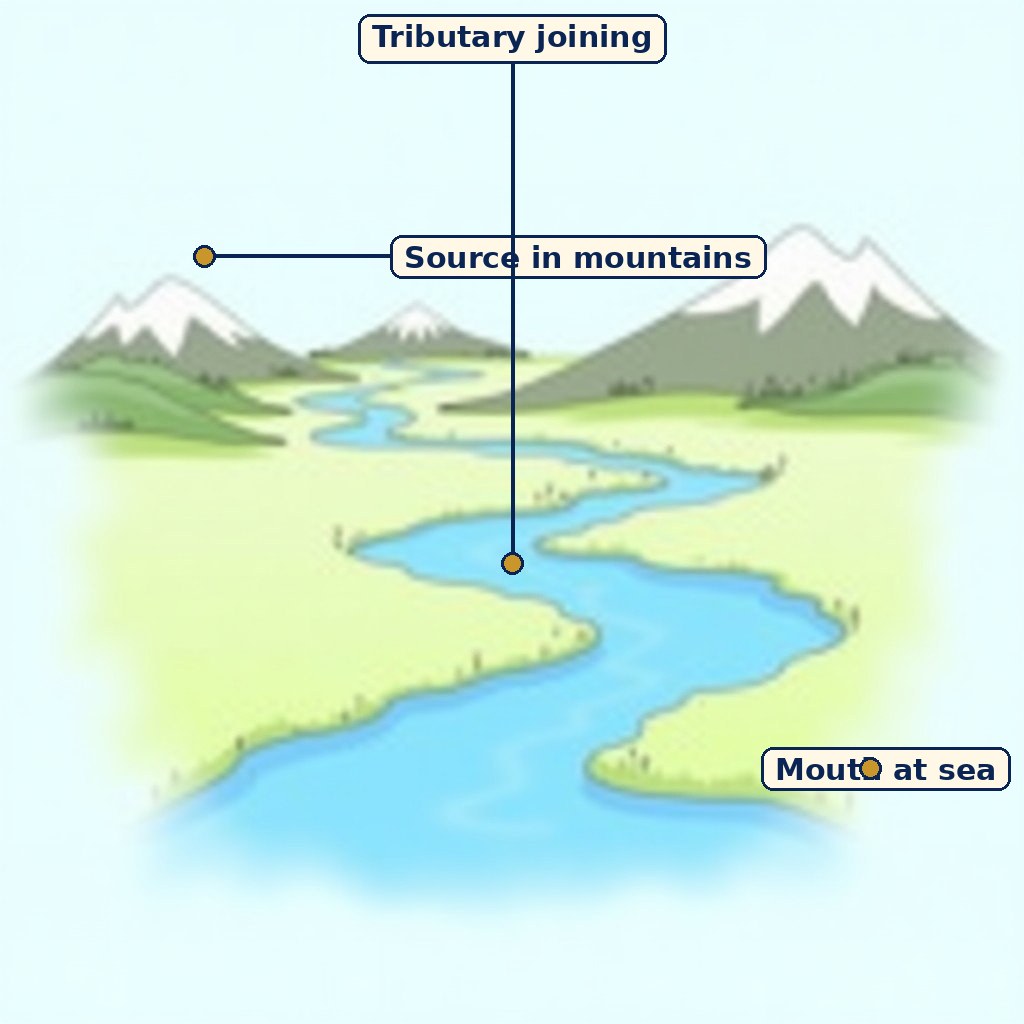
Diagram (labels are printed on the image): A river's journey from mountains to the sea. A general teaching picture.
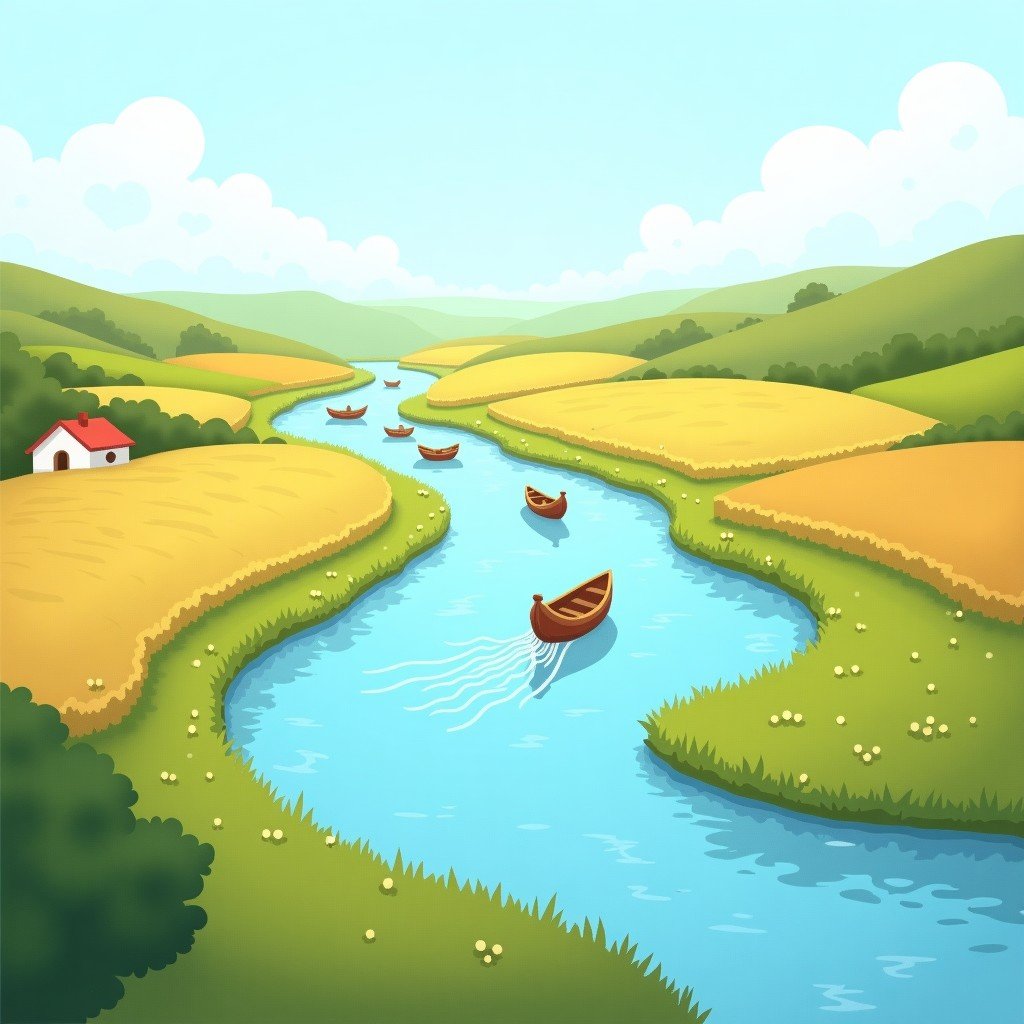
A river watering green fields. A general picture about rivers and farming.
What the chapter is about
A river begins as a small stream in the mountains, where snow melts or a spring flows. As it moves down, small streams join it and it grows wider and slower.
In the plains, the river spreads out, waters the fields, and helps farmers grow food. Many towns and cities grow on river banks because water, transport and fertile soil are all there.
At last the river meets the sea. The place where it meets is called its mouth, and the fertile land near the mouth is called a delta.
Rivers also carry soil, called silt, which settles on fields and makes them fertile. That is one more reason farmers have lived near rivers for thousands of years: the river brings both water and rich soil.
What you should learn
Learn a river's journey in stages: source → young river (mountains) → mature river (plains) → mouth (sea).
Key Terms
- Source — Where a river begins.
- Tributary — A small stream that joins a bigger river.
- Plains — Flat, fertile land.
- Mouth — Where a river meets the sea.
- Delta — Fertile land formed at a river's mouth.
- Silt — Fine, fertile soil carried and left behind by a river.
Remember
- Rivers begin in mountains as small streams.
- Tributaries join and make the river bigger.
- Plains rivers water farms and feed towns.
- A river ends at its mouth, often forming a delta.
Exam Tip / Common Mistake
Common mistake: calling the source the mouth. Source = beginning (mountains); mouth = end (sea).
Chart / Table: Stages of a river
| Stage | Place |
|---|---|
| Source | Mountains |
| Young river | Fast, narrow, rocky |
| Mature river | Wide, slow, plains |
| Mouth | Meets the sea |
Think and try
Trace a river's journey with your finger in the air: mountains, plains, mouth, sea. Say one thing that happens at each stage. Which stage helps farmers most, and why?
Practice set — try it yourself
- Where does a river begin?
Hint: Think about mountains and springs. - What is a tributary?
Hint: Think about small streams joining. - Why do cities grow on river banks?
Hint: Think about water and fertile soil. - What is a delta?
Hint: Think about the river's mouth. - Describe a river's journey in four lines.
Hint: Start at the source, end at the sea.
How to use this page: Read the summary, say the Key Terms in your own words, then try the practice set without looking. Ask your teacher or parent to check your answers.