

Chapter 11: Tourism
A good tour is planned before it starts: a clear map, an honest script, safe routes, and care for every visitor.
Original notes — ready CBSE (NCERT, English Medium) • Class 9 • Skill Education • Book: Kaushal Vikas
Chapter 11: Tourism — EG’s own notes, in simple words
Book: Kaushal Vikas (CBSE, Class 9) | Chapter 11 | Unit: Unit III: Work in Human Services | Medium: English
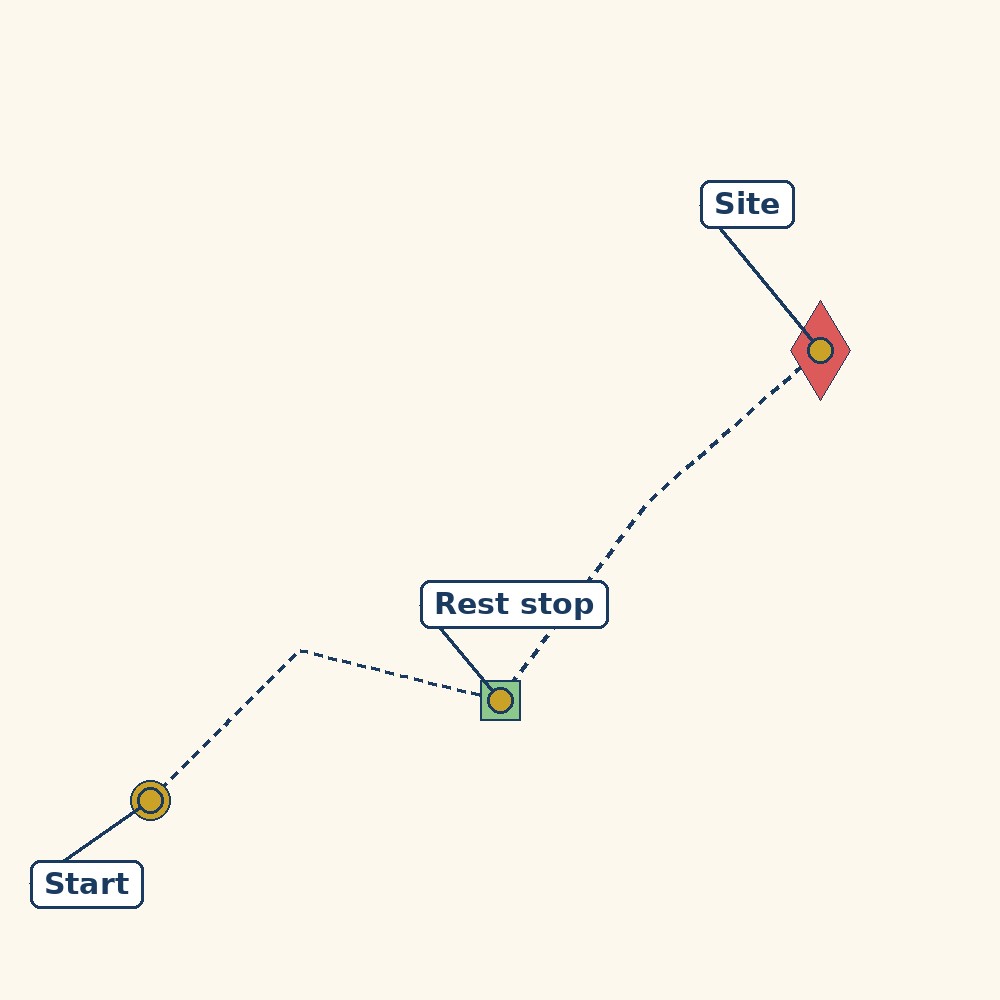
Diagram (labels are printed on the image): A tourism map: start point, route, rest stop and site, with clear symbols.

Guiding visitors at a site. A general picture about tourism; it is not a scene from the book.
What the chapter is about
India changes every few kilometres: land, language, food and stories all change as you travel. People travel for rest and rejuvenation, and for learning about other cultures. Tourism therefore teaches equality, diversity and compassion: behind every journey stand guides, storytellers, drivers and artisans. This chapter applies Chapter 9’s service foundation — orientation, environment, consent, quality — to a guided local tour, from scoping and site visit through materials, consent and preparation to delivery and review.
Scoping, process chart and site visit
What kind of service? Service types include a visit to an old school, a festival celebration, a mandi (market), a food street or a religious site. Materials include maps, photographs, devices and stationery, plus the stories of community elders. The chapter’s caselet is a walk to a local site — small, planned and fully under the students’ control.
Site visit. Visit a tourism site with your teacher and interact with a tourist guide, a travel agent, hotel or homestay staff, a museum attendant, an information-desk worker and a local artisan. Observe how they welcome visitors, answer questions and handle problems — and note what you would copy and what you would improve.
Materials, tools and bill of materials
Materials. Stationery for maps and brochures; dustbins and bags for waste; water bottles for the group; and a safety and first-aid kit whose expiry dates you have checked.
Tools. A tablet or smartphone for information and photographs; a map or GPS device — but verify routes in advance and never rely only on GPS; and a speaker kept at low volume so it informs without disturbing the site.
Costs (BoM thinking). A tourism BoM must show visible and invisible costs together: materials and transport, but also preparation time. It must also allow for unpredictable delays, cancellations and weather; for a limited tourist season; and for higher costs in remote areas. A BoM that shows only ticket prices is dishonest — preparation time is real labour.
Consent, and preparation: map, brochure, script, signages, promotion
Consent form. As in Chapters 9 and 10, a consent form is an agreement, not a legal document. For tourism it must share what will be provided, safety expectations, charges and refunds, and photo consent. Visitors fill and sign it before the tour begins.
Safety planning first. Before any creative work, plan safety: routes, rest stops, water, emergency areas, first aid and a way to contact help. Safety planning is preparation, not an afterthought.
Tourism map. A good map shows places of interest, facilities (washrooms, water, parking, bus stops, eateries) and routes with directions, using clear symbols, colours, labels and short descriptions. A map that only shows the site, without facilities and routes, fails its users.
Information brochure. A brochure carries history and stories; culture, language and cuisine; and practical information — museum and theatre timings, holidays, fees and parking, plus toilets, water and first aid. Stories without practical information leave visitors lost; practical information without stories leaves them bored.
Script. A guided script combines history, legends, festivals and anecdotes with operational and logistical information: rest stops, and local guidelines such as removing shoes at a site. The guide’s words are the service: they must be accurate, interesting and honest.
Signages. Signs must cover toilets, water, rest points, entry and exit, ramps, exhibit labels, safe and unsafe spots, volunteer positions, and zero-waste messages. Good signage is simple language, large enough to read, and placed where decisions are made — before a turn, not after it.
Promotion. Reach the audience through its preferred channel: personal invitations and printed material for a small group, digital and social media for many. Promotion must promise only what the tour will actually deliver.
Providing the service, and while performing
Pre-tour checklist and itinerary (caselet). Check everything before departure: consent forms, first-aid kit, water, maps, brochures, signages, volunteer positions. The caselet itinerary runs: 08:50 assembly at the school gate; 09:00 welcome, brief, registration and consent; 09:30 start the walk, with an optional rest stop; 09:55 reach the site; 11:00 refreshments; 12:00 return walk with a rest stop; 12:25 reach the school gate. Times are promises: a tour that drifts loses trust.
Engaging tourists. Dress neatly and comfortably; stay patient and calm; refuse politely but firmly when a request cannot be met — the chapter’s example script begins “Sorry Madam…”; and give special care to elders, children and persons with special needs. After the service, collect feedback in writing, video or audio; segregate waste into dry and wet; and clean and restore the site. That last step is responsible tourism: the site must be left as it was found, or better.
While performing: prepare an advance tour map with routes, entry and exit points, rest stops, water and emergency areas; learn from practitioner observation and build a guided script that combines safety information with facts; write signages in simple language; and communicate politely with active listening — a guide who listens hears problems early, while they are still small.
Key Terms
- Tourism — Travel for rest, rejuvenation and learning about other cultures.
- Tourism map — A map showing places of interest, facilities and routes with clear symbols, colours, labels and short descriptions.
- Information brochure — A guide combining history, stories, culture and practical information (timings, fees, toilets, first aid).
- Guided script — The guide’s prepared words: history, legends, festivals, anecdotes plus operational information.
- Signages — Signs for facilities, entry and exit, ramps, exhibits, safe and unsafe spots, volunteers and zero waste.
- Responsible tourism — Leaving the site clean and restored, with waste segregated, after the visit.
- Consent form — An agreement sharing what will be provided, safety expectations, charges and refunds, and photo consent.
- Itinerary — The timed plan of a tour, from assembly to return.
- BoM (bill of materials) — The cost list, including visible costs and invisible ones like preparation time.
Remember
- Tourism teaches equality, diversity and compassion; guides, storytellers, drivers and artisans make every journey.
- BoM must include invisible costs (preparation time) and allow for delays, cancellations, weather, season and remoteness.
- Consent covers provision, safety, charges and refunds, and photo consent — and it is not a legal document.
- Map: sites + facilities + routes, with clear symbols, colours, labels and short descriptions.
- Itinerary caselet: 08:50 assembly, 09:00 welcome/consent, 09:30 walk, 09:55 site, 11:00 refreshments, 12:00 return, 12:25 gate.
- After service: feedback (written, video or audio), waste segregated dry and wet, site cleaned and restored.
Exam Tip / Common Mistake
Common mistake: describing only the visit (“we went to the fort”) and forgetting preparation. Examiners mark the map, brochure, script, signages, consent and safety plan — the tour itself is only the last step of the service.
- Travel teaches equality, diversity and compassion through guides, drivers and artisans.
- Prepare before departure: safety plan, map, brochure, script, signages, consent and promotion.
- Costs include preparation time, delays, weather, season and remoteness — not just tickets.
- Deliver on time, care for elders, children and persons with special needs, refuse politely and firmly.
- End responsibly: feedback collected, waste segregated, site cleaned and restored.
Practice set — try it yourself
- What must a tourism map show, besides the site itself?
Hint: Facilities and routes, with symbols and labels. - What does a consent form for tourism cover?
Hint: Provision, safety, charges and refunds, photo consent. - What are the caselet’s assembly and return times?
Hint: 08:50 assembly, 12:25 return to the school gate. - What is responsible tourism, in one sentence?
Hint: Leave the site clean and restored, waste segregated. - Name one invisible cost a tourism BoM must include.
Hint: Preparation time.
Questions with Answers
- What is tourism, and what does it teach?
Tourism is travel for rest and rejuvenation and for learning about other cultures. Because India changes every few kilometres — land, language, food and stories — tourism teaches equality, diversity and compassion, and it depends on guides, storytellers, drivers and artisans behind every journey. - What does a good tourism map and information brochure contain?
A map shows places of interest, facilities (washrooms, water, parking, bus stops, eateries) and routes with directions, using clear symbols, colours, labels and short descriptions. A brochure adds history and stories, culture, language and cuisine, and practical information: museum and theatre timings, holidays, fees and parking, plus toilets, water and first aid. - What is a guided script, and what must signages cover?
A script combines history, legends, festivals and anecdotes with operational and logistical information, such as rest stops and local guidelines like removing shoes at a site. Signages must cover toilets, water, rest points, entry and exit, ramps, exhibit labels, safe and unsafe spots, volunteer positions and zero-waste messages, in simple language placed where decisions are made. - Describe the caselet itinerary and the pre-tour checklist.
08:50 assembly at the school gate; 09:00 welcome, brief, registration and consent; 09:30 start the walk with an optional rest stop; 09:55 reach the site; 11:00 refreshments; 12:00 return walk with a rest stop; 12:25 reach the school gate. Before departure, check consent forms, first-aid kit, water, maps, brochures, signages and volunteer positions. - What happens after the tour, and why?
Feedback is collected in writing, video or audio; waste is segregated into dry and wet; and the site is cleaned and restored. This is responsible tourism: the visit must not damage or dirty the place that welcomed it, and feedback is what improves the next tour.
Extension Questions with Answers
- Review a designed tourism service. Which three decisions most improved the experience, and which two would you change?
Most improved: a verified route with a printed map (no one got lost); a script mixing stories with rest-stop and shoe-removal guidance (visitors felt informed, not lectured); and clear signages at every decision point. To change: promotion promised a longer site visit than the itinerary allowed (promise only what will be delivered), and waste bins were placed only at the end (bins must sit at rest stops and the site too). - Compare two tourism services — a festival visit and a heritage walk, or a hiking trip and a museum visit. How do their needs differ?
A festival visit needs crowd management, clear entry and exit, and loud, simple announcements; a heritage walk needs a strong script, rest stops and shade. A hiking trip needs safety planning, water, first aid and weather allowances above all; a museum visit needs timings, fees, exhibit labels and quiet, accessible routes. The service design follows the risk and the audience, not a single template. - Some tourists break rules and damage a site. What causes this, and what are tourists’ and providers’ responsibilities?
Causes include ignorance (no signage, no briefing), crowding, and a feeling that rules do not apply to visitors. Tourists are responsible for following guidelines, respecting the site and its people, and disposing of waste properly. Providers are responsible for briefing visitors, placing clear signages, supervising, and restoring the site — prevention is their job, not blame after damage. - A tour bus breaks down in a remote area. What preparations cover safety, inconvenience and trust?
Safety: a first-aid kit, water, charged phones, emergency contacts and a route shared in advance. Inconvenience: shade or shelter, rest arrangements, and an honest revised plan. Trust: immediate, truthful communication about what happened and what happens next, plus a refund or alternative where charges were paid. A provider who communicates early keeps trust; one who hides the problem loses it. - How would you continue a tourism service every year? Cover training, materials, safety, communication, costing and documentation.
Training: brief new volunteers with the previous year’s script and feedback. Materials: refresh maps, brochures and signages and check first-aid expiry dates. Safety: re-verify routes and emergency areas. Communication: keep the audience’s preferred channel and promise only what will be delivered. Costing: update the BoM including preparation time and seasonal costs. Documentation: keep consent records, feedback and a report of what changed — so next year starts from evidence, not memory.
How to use this page: Read the summary, say the Key Terms in your own words, then try the practice set without looking. Use the Questions with Answers to check yourself afterwards. Ask your teacher or parent to check your answers.