

Chapter 5: Exploring Mixtures and their Separation
Original notes — ready CBSE (NCERT, English Medium) • Class 9 • Science • Book: Exploration
Chapter 5: Exploring Mixtures and their Separation — EG's own notes, in simple words
Book: Exploration (CBSE, Class 9) | Chapter 5 | Medium: English

Diagram (labels are printed on the image): Diagram (labels are printed on the image): Filtration: the mixture is poured through filter paper, the solid residue stays behind and the clear filtrate collects below. A general diagram for study, not a figure copied from the book.
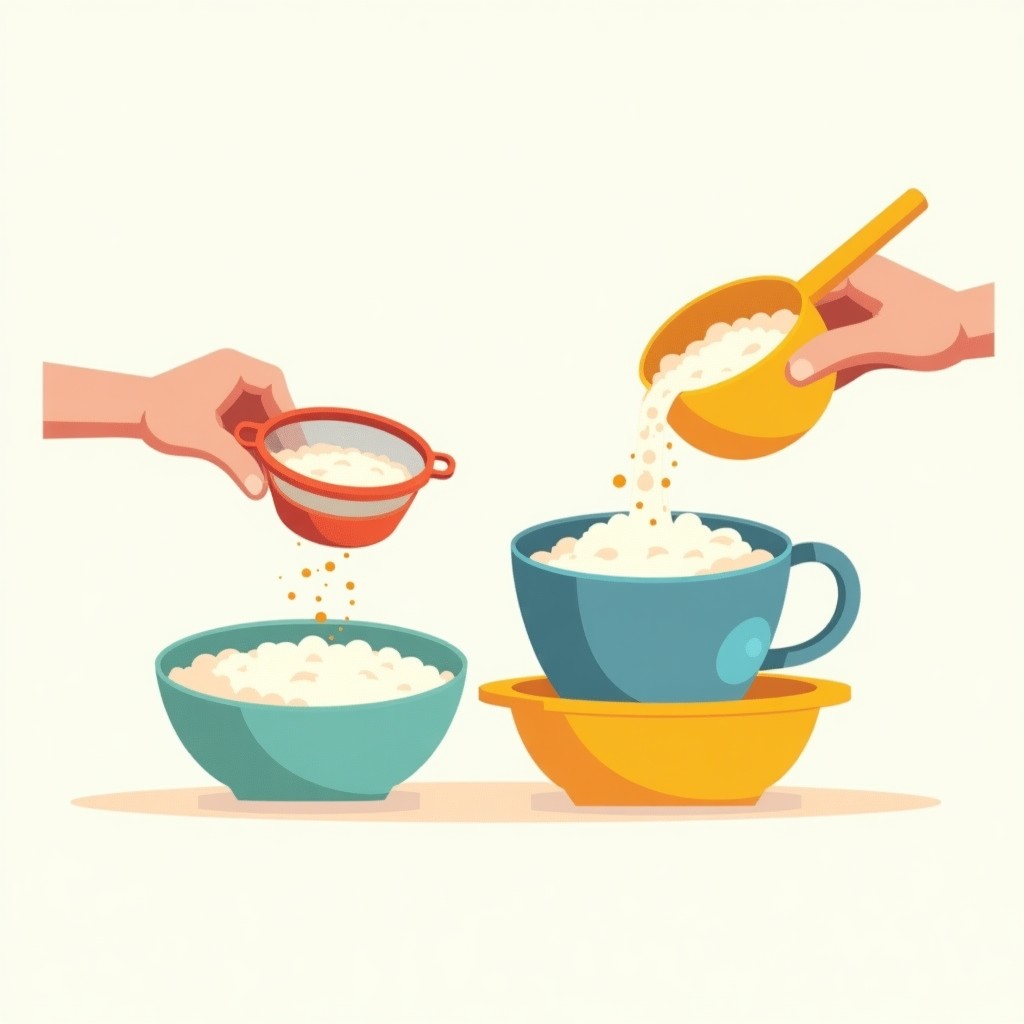
Separation in everyday life — sieving, filtering and evaporation. A general picture about mixtures, not a book scene.
What the chapter is about
Most things around us are mixtures, not pure substances. Air, sea water, soil and the food we eat are all made of two or more substances mixed together. In a mixture, the parts keep their own properties and can usually be separated again by physical methods.
Mixtures can be homogeneous, with the same composition throughout, like salt dissolved in water, or heterogeneous, where the parts can be seen separately, like sand in water. Some mixtures are colloids or suspensions, where tiny particles are spread through another substance but do not dissolve.
The method of separation depends on the properties of the parts. Filtration separates an insoluble solid from a liquid; evaporation recovers a dissolved solid; distillation separates liquids with different boiling points; sublimation separates a substance that turns directly into vapour; magnetic separation picks out iron; and chromatography separates the colours in a dye.
What you should learn
Notice that a mixture keeps the properties of its parts, and that each separation method works because of one difference in properties.
Key Terms
- Mixture — Two or more substances mixed together, keeping their own properties, and usually separable by physical methods.
- Homogeneous mixture — A mixture with the same composition throughout, like salt solution.
- Heterogeneous mixture — A mixture whose parts can be seen or separated easily, like sand and water.
- Filtrate — The liquid that passes through a filter.
- Residue — The solid left behind on the filter paper.
Remember
- Mixtures can usually be separated by physical methods.
- Homogeneous mixtures look the same throughout; heterogeneous mixtures do not.
- Filtration separates an insoluble solid from a liquid.
- Evaporation recovers a dissolved solid; distillation separates liquids.
Exam Tip / Common Mistake
Common mistake: saying evaporation and distillation are the same. Evaporation recovers only the solid and lets the liquid escape; distillation collects both parts — the vapour is condensed and collected as a liquid again.
Chart / Table: Choosing a separation method
| Point | Detail |
|---|---|
| Filtration | Insoluble solid from a liquid (sand from water) |
| Evaporation | Dissolved solid from a solution (salt from sea water) |
| Distillation | Liquids with different boiling points |
| Sublimation | A solid that turns directly into vapour (camphor) |
| Magnetic separation | Iron or steel from a mixture |
Practice set — try it yourself
- Is air a mixture or a pure substance? Why?
Hint: Think about how many gases air contains. - How would you separate sand from water?
Hint: Think about a solid that does not dissolve. - How can salt be recovered from salt water?
Hint: Think about what happens when water evaporates. - Why is distillation better than evaporation for getting pure water?
Hint: Think about collecting the vapour too. - Name one mixture separated by a magnet in daily life.
Hint: Think about iron objects mixed with other things.
Questions with Answers
- What is a mixture?
A mixture is two or more substances mixed together. The parts keep their own properties and can usually be separated again by physical methods. - What is the difference between a homogeneous and a heterogeneous mixture?
A homogeneous mixture has the same composition throughout, like salt dissolved in water. A heterogeneous mixture has parts that can be seen separately, like sand in water. - How does filtration work?
In filtration, a mixture is poured through filter paper. The insoluble solid, the residue, stays on the paper, while the liquid, the filtrate, passes through into the container below. - Why can a mixture be separated by physical methods?
Because the substances in a mixture are not chemically combined, they keep their own properties, such as solubility or boiling point, and those differences allow physical separation. - When would you use distillation instead of evaporation?
When you want to recover both the liquid and the solid, or to obtain the pure liquid itself. In distillation the vapour is condensed and collected, while in evaporation the liquid escapes.
How to use this page: Read the summary, say the Key Terms in your own words, then try the practice set without looking. Use the Questions with Answers to check yourself afterwards. Ask your teacher or parent to check your answers.