

Chapter 8: Inspiration and Imagination
Original notes — ready CBSE (NCERT, English Medium) • Class 8 • Arts • Book: Kriti
Chapter 8: Inspiration and Imagination — EG's own notes, in simple words
Book: Kriti (CBSE, Class 8) | Chapter 8 | Section: Music | Medium: English

Diagram (labels are printed on the image): Imagination turning into music. A general picture about creativity; it is not a scene from the book.
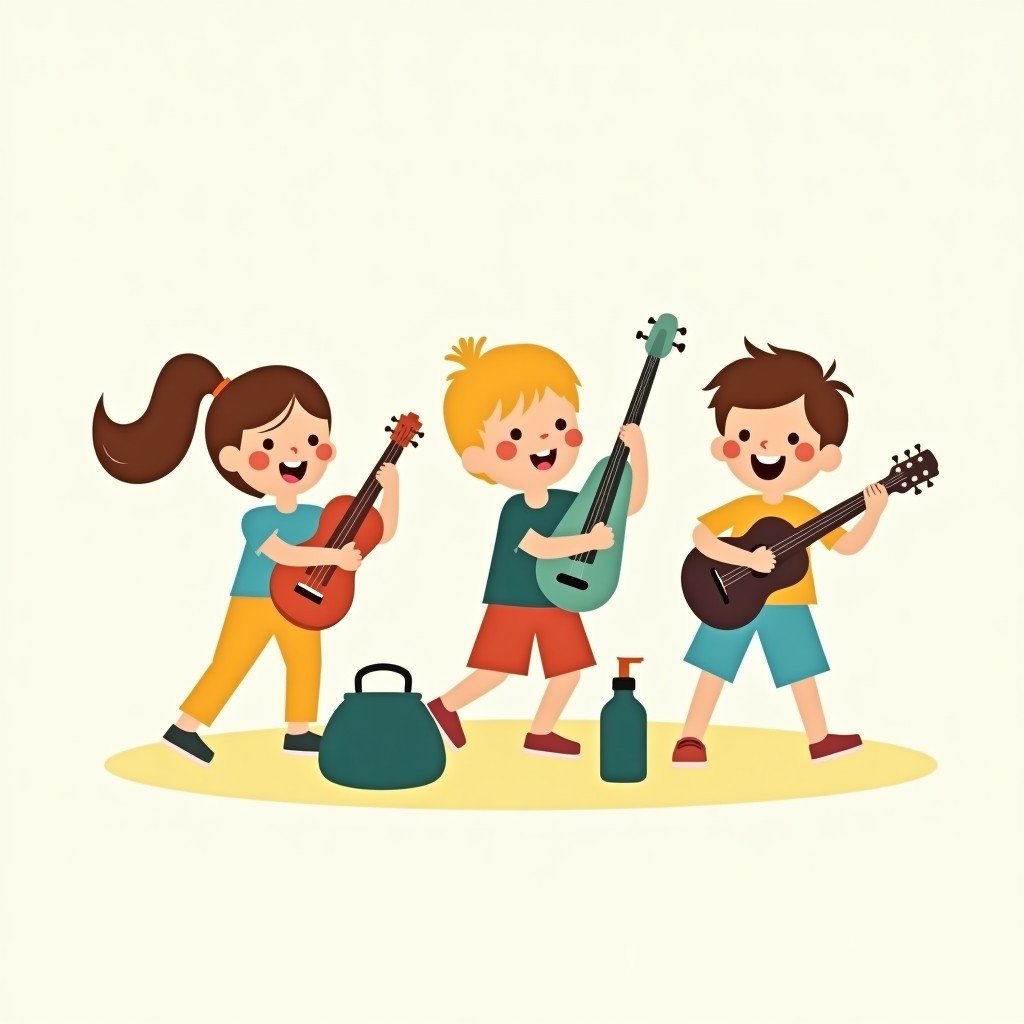
Everyday sounds can inspire new music.
What the chapter is about
Music often begins with something we notice: rain on a roof, a bird's call, a festival song, or a feeling we cannot put into words. This spark is called inspiration. It gives a musician something to say and a reason to create.
Imagination turns that spark into music. A musician may take a simple rhythm and change it, sing a tune in a new way, or combine sounds nobody combined before. Imagination is not magic — it grows when we listen widely, play freely and are not afraid to try something unusual.
Every learner can compose a little. Start with a short rhythm or a few notes, repeat it, change one thing at a time, and listen to the result. Sharing your small creation and hearing others' ideas will inspire you further, and that cycle keeps music alive.
What you should learn
Inspiration is the spark — something seen, heard or felt — and imagination shapes it into new music through trying, changing and listening.
Key Terms
- Inspiration — A person, sound, feeling or experience that sparks a new creative idea.
- Imagination — The ability to picture and create new sounds, tunes and ideas.
- Composition — A piece of music created by a composer.
- Variation — A changed version of a tune or rhythm, made by altering something in it.
- Composer — A person who creates music.
Remember
- Inspiration can come from nature, feelings, festivals or other music.
- Imagination grows with wide listening and free play.
- Change one thing at a time when you compose.
- Sharing creations inspires everyone in the group.
Exam Tip / Common Mistake
Common mistake: waiting for a perfect idea before starting. Begin with something small — a clap pattern or three notes — and let the idea grow as you play.
Chart / Table: From spark to song
| Point | Detail |
|---|---|
| Notice | Hear or feel something interesting |
| Imagine | Picture how it could sound |
| Try | Play a small pattern or tune |
| Change | Vary one thing and listen |
| Share | Let others hear and respond |
Practice set — try it yourself
- Name something in your day that could inspire a tune.
Hint: Listen around you: sounds, weather, moods. - How can you turn a clap pattern into a small composition?
Hint: Think about repeating and changing it. - Why is it good to listen to many kinds of music?
Hint: Think about how new ideas enter your imagination. - What is a variation? Give a simple example.
Hint: Change speed, loudness or one note. - Why should you share a first try even if it is not perfect?
Hint: Think about feedback and encouragement.
Questions with Answers
- What is inspiration in music?
Inspiration is the spark that starts a creative idea — a sound, a feeling, a story or another piece of music that makes a musician want to create something new. - How does imagination help a musician?
Imagination lets a musician picture new tunes, rhythms and combinations before playing them. It turns a small spark into a fuller piece through trying and changing ideas. - What is a variation?
A variation is a changed version of a tune or rhythm. For example, playing the same tune faster, softer, or with one note changed creates a variation while keeping the tune recognisable. - How can a beginner start composing?
By starting small: choose a short rhythm or a few notes, repeat them, change one thing at a time, and listen carefully. Small steps build confidence and skill. - Why is sharing your music important?
Sharing lets others enjoy your work, offer ideas, and inspire you in return. Music grows in a community where people listen to and encourage each other.
How to use this page: Read the summary, say the Key Terms in your own words, then try the practice set without looking. Use the Questions with Answers to check yourself afterwards. Ask your teacher or parent to check your answers.