

Chapter 19: Campaign for Art Awareness
Original notes — ready CBSE (NCERT, English Medium) • Class 8 • Arts • Book: Kriti
Chapter 19: Campaign for Art Awareness — EG's own notes, in simple words
Book: Kriti (CBSE, Class 8) | Chapter 19 | Section: Visual Arts | Medium: English

Diagram (labels are printed on the image): A school campaign for art awareness. A general picture about campaigns; it is not a scene from the book.
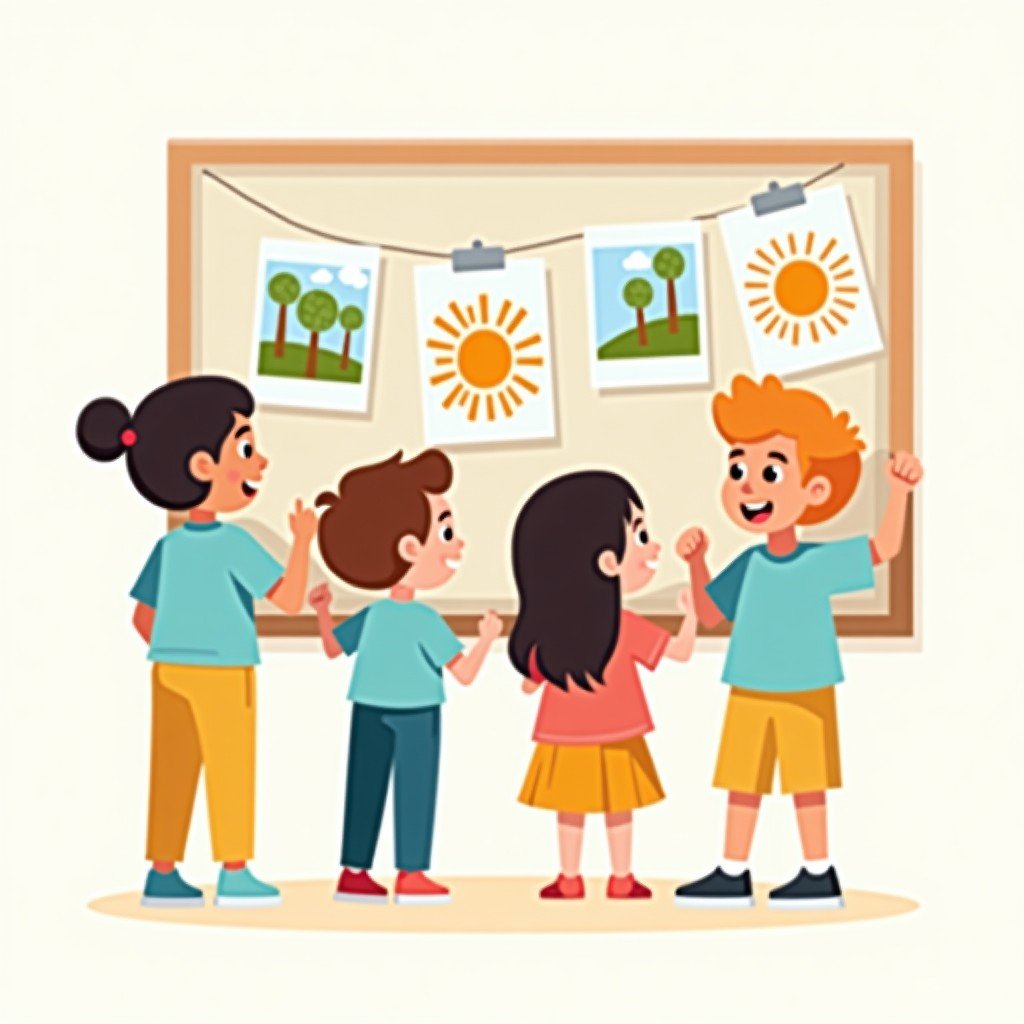
A school art exhibition: sharing work with everyone.
What the chapter is about
A campaign is an organised effort to spread a message. A campaign for art awareness aims to help more people notice, enjoy and value art — in school, at home and in the community. It answers a simple question: why does art matter to everyone?
Campaigns use many tools: posters with clear messages, exhibitions of student work, art walks, talks and performances. A good poster needs a short, strong message and an eye-catching picture; an exhibition needs thoughtful display so every work is seen and respected.
Planning a campaign teaches teamwork and communication. Students decide the message, divide jobs, set a date, invite people and collect feedback. When the campaign succeeds, art becomes a shared joy in the school, not just a subject in a timetable.
What you should learn
An art-awareness campaign spreads the message that art matters, using posters, exhibitions and events planned and shared as a team.
Key Terms
- Campaign — An organised effort to spread a message or cause change.
- Awareness — Knowing about and understanding the value of something.
- Poster — A large printed sheet that shares a message with pictures and words.
- Exhibition — A public display of artworks for people to view.
- Audience — The people a campaign or display is meant to reach.
Remember
- A campaign spreads one clear message to many people.
- Posters need a short message and a strong picture.
- Exhibitions should display every work with respect.
- Planning, teamwork and feedback make campaigns succeed.
Exam Tip / Common Mistake
Common mistake: putting too many words on a poster. One short message and one strong image reach people far better than a crowded poster.
Chart / Table: Planning an art-awareness campaign
| Point | Detail |
|---|---|
| Message | Decide one clear idea: art matters |
| Tools | Posters, exhibition, performance, talk |
| Team | Divide jobs: design, display, invites |
| Event | Set a date and invite the school |
| Feedback | Ask visitors what they enjoyed and learned |
Practice set — try it yourself
- What is the goal of an art-awareness campaign?
Hint: Think about helping people value art. - Why should a poster carry only one short message?
Hint: Think about what people read at a glance. - How should artworks be displayed in an exhibition?
Hint: Think about respect and visibility for every work. - List four jobs in planning a campaign.
Hint: Think about design, display, invites and hosting. - Design a poster slogan for art awareness in your school.
Hint: Keep it short and positive.
Questions with Answers
- What is a campaign for art awareness?
It is an organised effort to help more people notice, enjoy and value art, in school and the community, through posters, exhibitions, performances and events. - Why are posters useful in a campaign?
Posters share a short, strong message with pictures that catch the eye quickly, reaching many people in corridors, classrooms and public places. - What makes a good art exhibition?
Thoughtful display: every work shown clearly and respectfully, with labels, good lighting and space to stand back, so visitors can enjoy each piece. - How does planning a campaign teach teamwork?
Students must agree on a message, divide jobs, meet deadlines, solve problems and host visitors together — all real teamwork and communication skills. - How can a school know if its campaign worked?
By collecting feedback: asking visitors what they enjoyed, noticed or learned, and counting attendance and participation. Feedback also guides the next campaign.
How to use this page: Read the summary, say the Key Terms in your own words, then try the practice set without looking. Use the Questions with Answers to check yourself afterwards. Ask your teacher or parent to check your answers.