

Chapter 11: Pan Indian Dance Forms
Original notes — ready CBSE (NCERT, English Medium) • Class 8 • Arts • Book: Kriti
Chapter 11: Pan Indian Dance Forms — EG's own notes, in simple words
Book: Kriti (CBSE, Class 8) | Chapter 11 | Section: Dance and Movement | Medium: English

Diagram (labels are printed on the image): Dance forms from across India. A general picture about India's dance diversity; it is not a scene from the book.
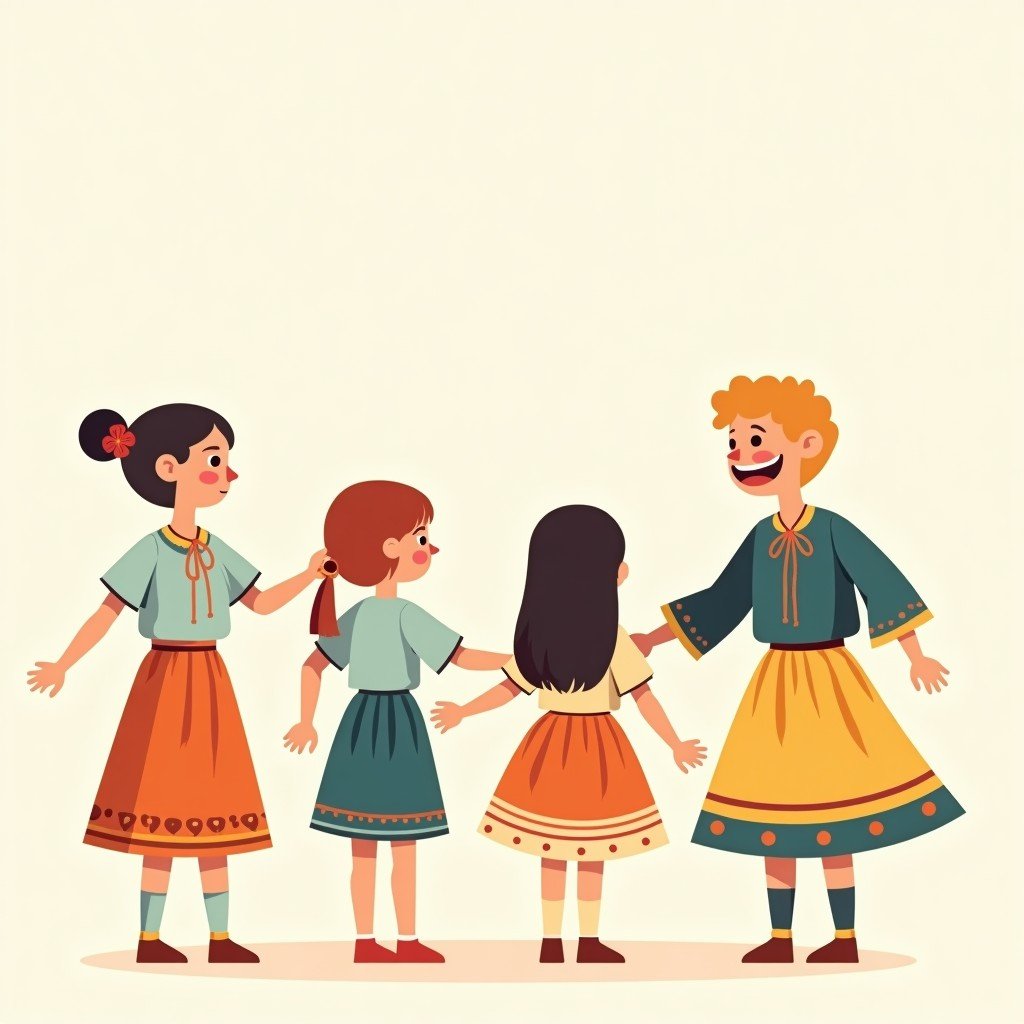
Watching folk dance at a festival: dance as celebration.
What the chapter is about
India is home to many dance forms, from classical styles refined over centuries to joyful folk dances of villages and festivals. Each region has its own movements, costumes, music and stories, shaped by its language, landscape and traditions.
Classical dances, such as Bharatanatyam, Kathak, Odissi, Kuchipudi, Manipuri, Kathakali, Mohiniyattam and Sattriya, follow detailed traditions of gesture, rhythm and storytelling. Folk dances, by contrast, grow from community life — harvests, weddings and seasons — and invite everyone to join.
Seeing these forms together shows both unity and variety. All Indian dances use the body to tell stories and celebrate life, yet each keeps its own flavour. Respecting every form, and learning a little about its home region, helps us appreciate the whole country's heritage.
What you should learn
India's dance heritage spans classical forms from many regions and folk dances from community life, united by storytelling and celebration, varied in style.
Key Terms
- Classical dance — A dance form with a long, detailed tradition of technique, gesture and repertoire.
- Folk dance — A dance from community life, often performed at festivals and celebrations.
- Gesture — A hand or body movement that carries meaning in dance.
- Costume — The special clothing worn for a dance performance.
- Heritage — Traditions and art forms passed down through generations.
Remember
- India has both classical and folk dance traditions.
- Each region's dance reflects its language and way of life.
- Classical dance follows detailed technique; folk dance grows from community celebration.
- All forms use the body to tell stories and celebrate.
Exam Tip / Common Mistake
Common mistake: calling every Indian dance 'classical'. Folk dances are equally important — they belong to community life rather than a formal classical tradition.
Chart / Table: Two broad families of Indian dance
| Point | Detail |
|---|---|
| Classical | Long tradition, detailed technique, storytelling gestures |
| Folk | Community celebrations, harvests, weddings, seasons |
| Shared | Music, rhythm, costume, expressive movement |
Practice set — try it yourself
- Name one classical and one folk dance form you know.
Hint: Think about their regions and occasions. - How does a folk dance reflect community life?
Hint: Think about harvests and festivals. - Why do different regions have different dance costumes?
Hint: Think about climate, materials and traditions. - What do classical and folk dances share?
Hint: Think about music, rhythm and expression. - Why is it important to respect every dance form?
Hint: Think about heritage and identity.
Questions with Answers
- What is the difference between classical and folk dance?
Classical dance follows a long, formal tradition with detailed technique, gestures and repertoire. Folk dance grows from community life and is performed at festivals, harvests and celebrations, often by everyone together. - Why does India have so many dance forms?
Because each region has its own language, landscape, festivals and traditions, which shape its movements, music and costumes. This variety is part of India's cultural richness. - What role do gestures play in classical dance?
Gestures carry meaning: hand and body movements can show objects, animals, feelings and story events, so dancers can tell a whole story without words. - How do folk dances keep community traditions alive?
By being performed together at celebrations year after year, they pass songs, steps and stories to children, strengthening community bonds and identity. - Why should we learn about dance forms from other regions?
To appreciate India's shared heritage and respect its diversity. Learning about another region's dance teaches us about its people, history and way of life.
How to use this page: Read the summary, say the Key Terms in your own words, then try the practice set without looking. Use the Questions with Answers to check yourself afterwards. Ask your teacher or parent to check your answers.