

Chapter 10: Inner Dynamics of Dance
Original notes — ready CBSE (NCERT, English Medium) • Class 8 • Arts • Book: Kriti
Chapter 10: Inner Dynamics of Dance — EG's own notes, in simple words
Book: Kriti (CBSE, Class 8) | Chapter 10 | Section: Dance and Movement | Medium: English
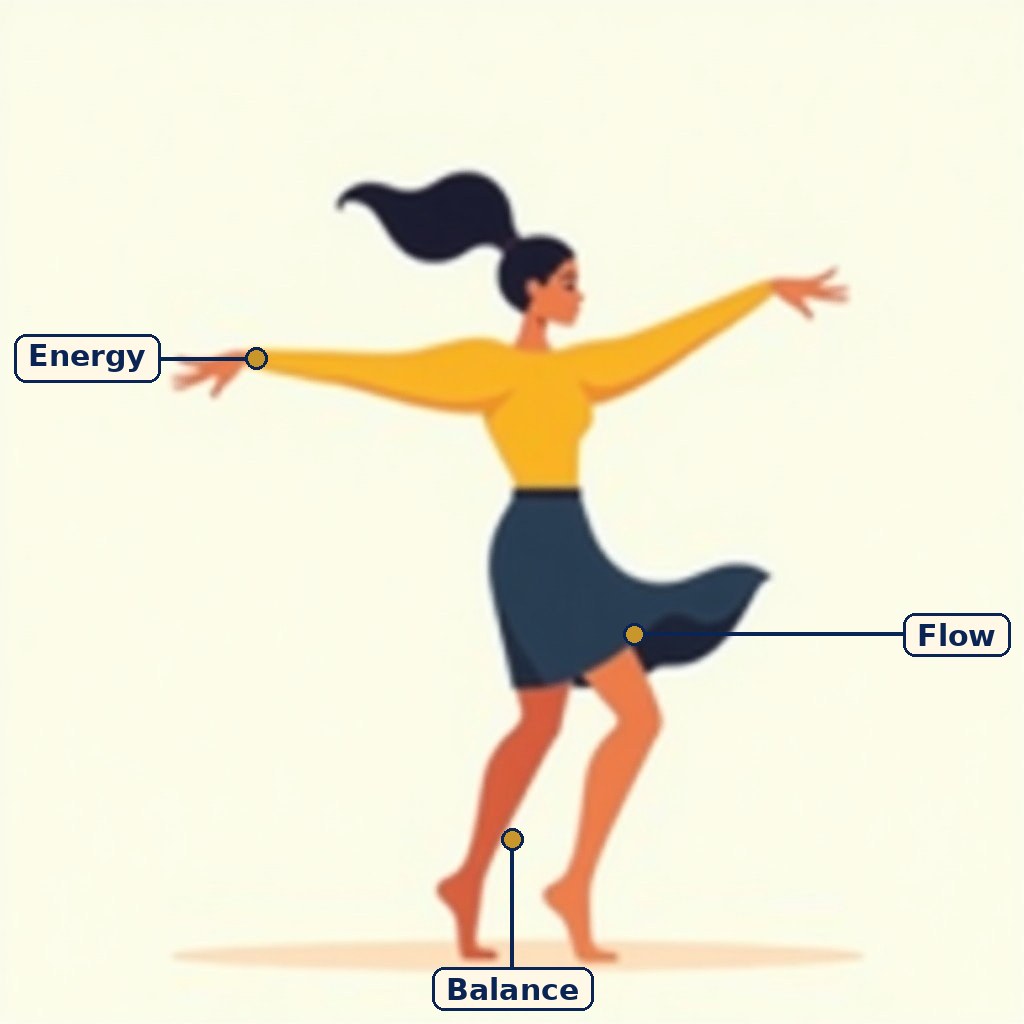
Diagram (labels are printed on the image): A dancer's flowing movement. A general picture about dance dynamics; it is not a scene from the book.
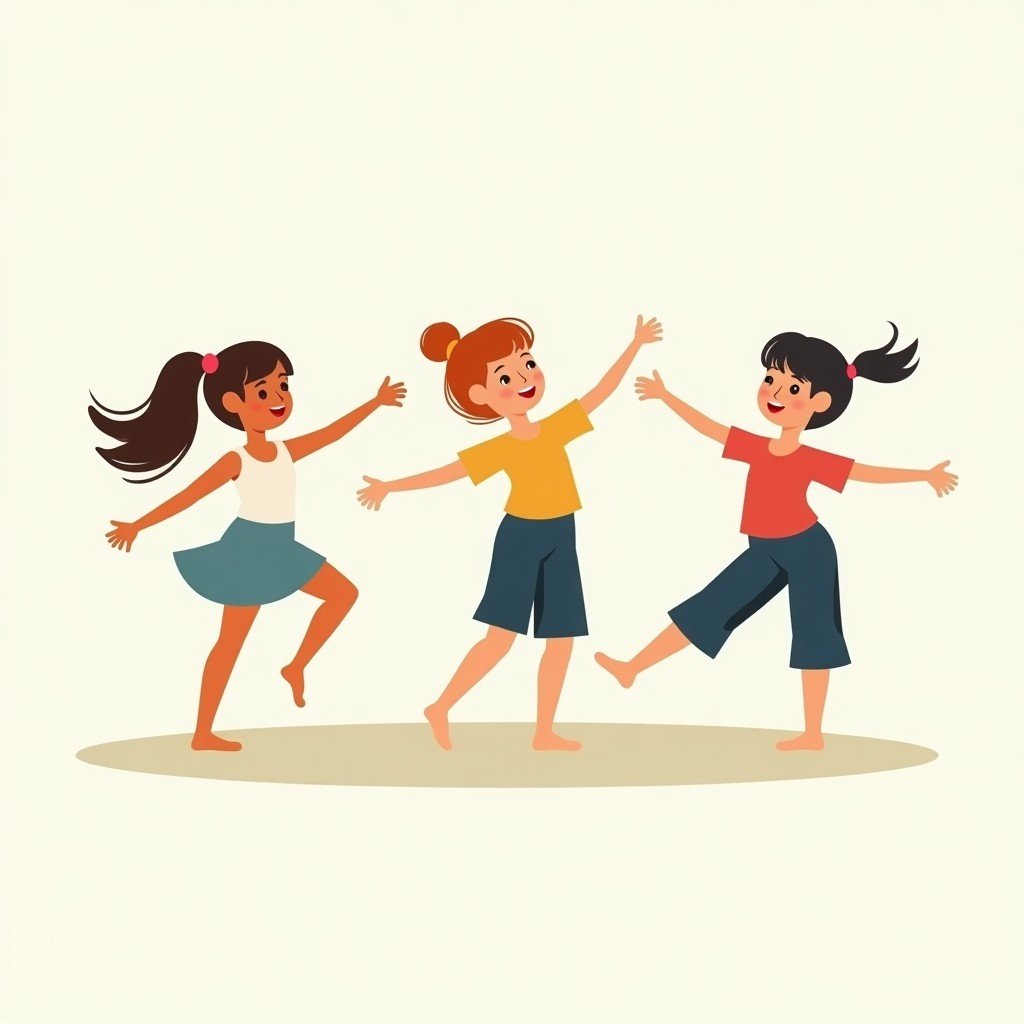
Practising slowly: control and balance before speed.
What the chapter is about
Dance is not only steps; it is how steps are done. The inner dynamics of dance are the hidden qualities inside movement: energy, flow, speed, weight and balance. Two dancers can do the same step, but one may make it look sharp and strong while the other makes it soft and floating.
Energy is how much force we put into a movement. Flow is whether movement is smooth and continuous or broken into stops. Speed, weight and balance complete the picture: a heavy, slow movement feels very different from a light, quick one, even with the same shape.
Learning dynamics helps dancers express feelings. Joy may dance light and quick, while sorrow may move slow and heavy. When we practise noticing dynamics in our own bodies, we become more expressive dancers and more attentive watchers too.
What you should learn
Dance dynamics — energy, flow, speed, weight and balance — are the inner qualities that make the same step feel strong, soft, quick or slow.
Key Terms
- Dynamics — The inner qualities of movement, such as energy, flow and speed.
- Energy — The force or effort put into a movement.
- Flow — How smoothly or brokenly movement continues.
- Balance — Steady control of the body while moving or holding a pose.
- Expression — Feelings shown through movement, face and gesture.
Remember
- Same step, different dynamics, different feeling.
- Energy is force; flow is smoothness.
- Weight and speed change the mood of movement.
- Balance needs practice, slowly first, then faster.
Exam Tip / Common Mistake
Common mistake: thinking dance is only memorising steps. Examiners and audiences notice dynamics — practise the same step sharp, then soft, then slow, then quick.
Chart / Table: Dynamics and their feeling
| Point | Detail |
|---|---|
| Strong energy | Powerful, bold feeling |
| Light energy | Gentle, floating feeling |
| Smooth flow | Calm, continuous feeling |
| Broken flow | Sudden, surprising feeling |
| Slow speed | Heavy or thoughtful feeling |
| Quick speed | Excited, joyful feeling |
Practice set — try it yourself
- Do one arm movement sharply, then softly. What changes?
Hint: Notice energy and flow. - How would you dance joy differently from sorrow?
Hint: Think about speed, weight and energy. - Why practise slowly before dancing fast?
Hint: Think about balance and control. - Watch a dancer and name two dynamics you see.
Hint: Use words like flow, energy and speed. - How does balance help a dancer hold a pose?
Hint: Think about steady control of the body.
Questions with Answers
- What are the inner dynamics of dance?
They are the inner qualities of movement: energy (force), flow (smoothness), speed, weight and balance. They decide how a step feels, not only what shape it makes. - How can the same step look different?
By changing its dynamics. A step done with strong energy and sharp flow looks bold, while the same step done softly and smoothly looks gentle and floating. - Why is flow important in dance?
Flow decides whether movement feels continuous and calm or broken and surprising. It shapes the mood the audience feels, even when the steps stay the same. - How do dynamics express feelings?
Feelings have movement qualities: joy is often light and quick, sorrow slow and heavy, anger strong and sharp. Dancers choose dynamics that match the feeling they want to show. - Why do dancers practise balance slowly?
Because balance needs steady control of muscles and posture. Slow practice builds that control, so faster and more complex movements later stay safe and graceful.
How to use this page: Read the summary, say the Key Terms in your own words, then try the practice set without looking. Use the Questions with Answers to check yourself afterwards. Ask your teacher or parent to check your answers.