
Chapter 8: Weigh it, Pour it
Original notes — ready CBSE (NCERT, English Medium) • Class 4 • Mathematics • Book: Math Mela
Weigh it, Pour it — EG's own notes, in simple words
Book: Math Mela (CBSE, Class 4) | Chapter 8 | Medium: English
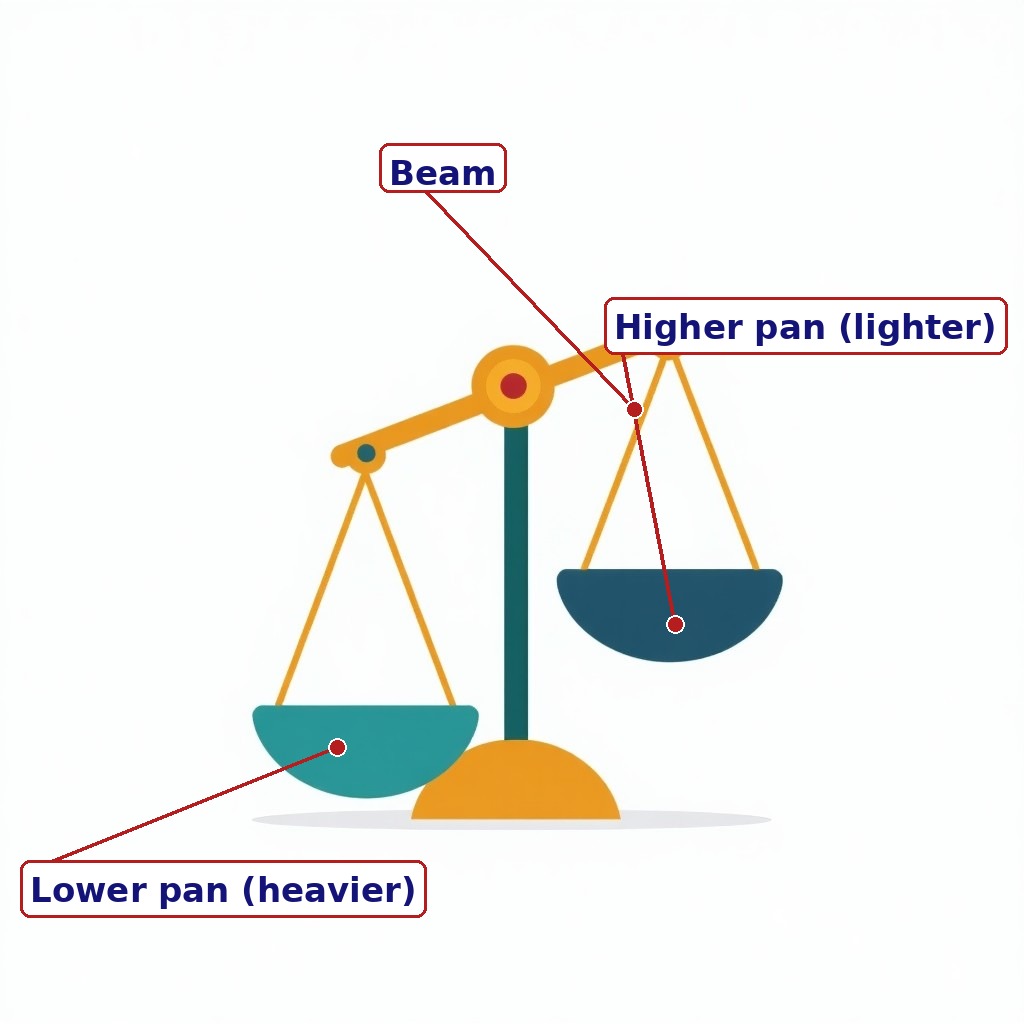
Diagram (labels are printed on the image): A balance scale with a beam and two pans: the left pan hangs lower and the right pan hangs higher. 'Lower pan (heavier)' points to the left pan, 'Higher pan (lighter)' to the right pan, and 'Beam' to the beam across the top. Honest note: both pans are empty, so the picture shows how a balance tips, not any real weight — no object is actually being weighed here.
1. Weighing things
We weigh things on a balance or a weighing scale. Weight is measured in grams (g) for light things and kilograms (kg) for heavy things. 1 kg = 1,000 g. A balance has two pans: the heavier side goes down. If both pans are level, the two sides weigh the same.
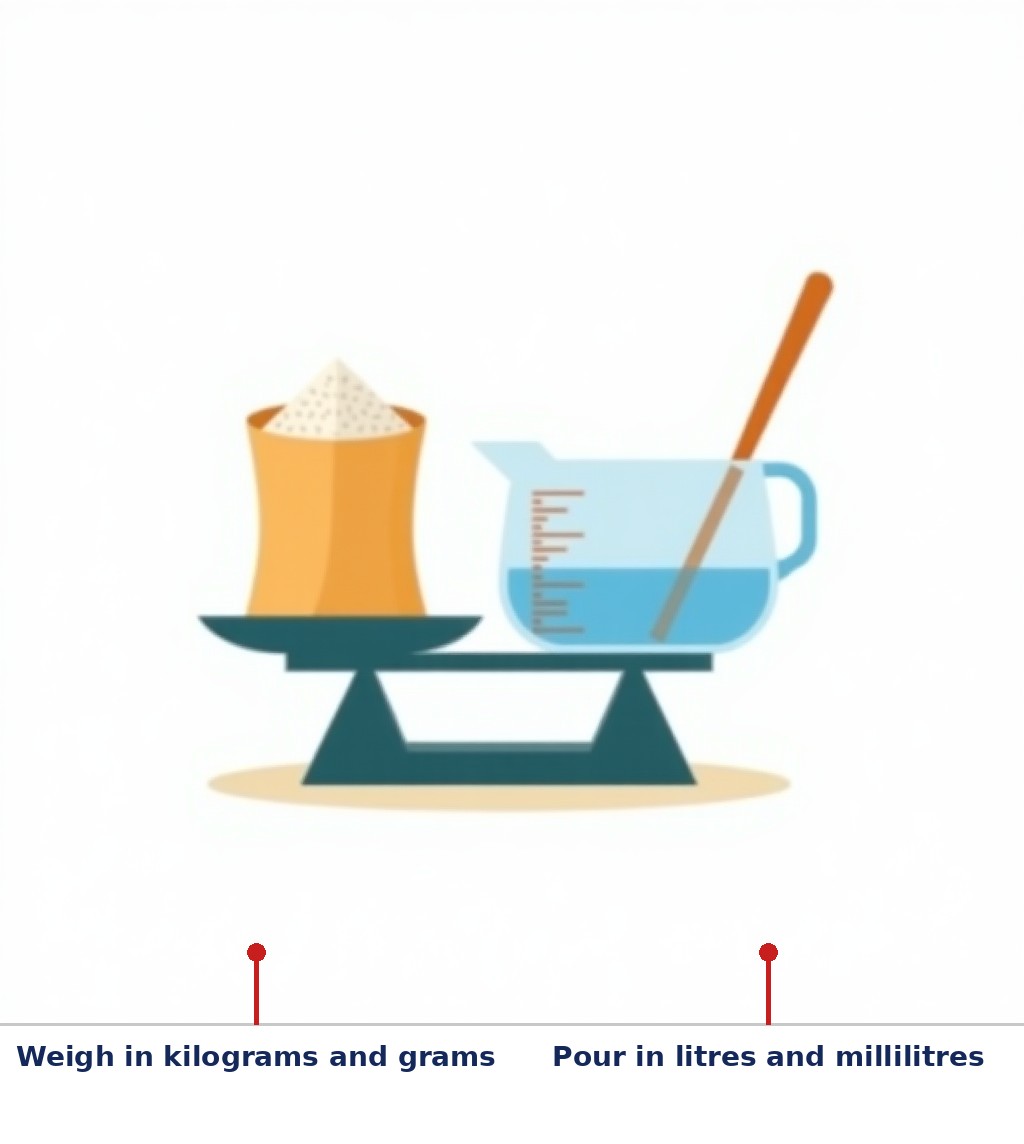
New diagram: Weighing and pouring: weight is measured in kilograms and grams, liquids in litres and millilitres. Simplified picture; the scale and jug are not drawn to exact scale and no exact reading should be taken from the image.
2. Pouring and measuring liquids
Liquids are poured into measuring jugs or beakers marked in millilitres and litres. 1 litre = 1,000 millilitres. When you read a jug, keep your eyes level with the surface of the liquid, or your reading will be wrong.
| Thing | About how much? | Unit |
|---|---|---|
| An apple | 150 | grams |
| A school bag | 4 | kilograms |
| A glass of water | 200 | millilitres |
| A bucket of water | 10 | litres |
3. Worked examples
Example 1: A bag of rice weighs 5 kg. Mother takes out 2 kg for the week. How much is left? 5 − 2 = 3 kg. Example 2: A bottle holds 750 mL of oil. How many such bottles make 3 litres? 3 litres = 3,000 mL, and 3,000 ÷ 750 = 4 bottles. Example 3: Two parcels weigh 800 g and 1 kg 200 g. Together they weigh 800 + 1,200 = 2,000 g = 2 kg.
4. Estimating first, then measuring
Before you weigh or pour, guess first. "I think this book weighs about 500 g." Then weigh it. If your guess is close, your sense of weight is growing. Good estimators are rarely surprised — and they quickly spot a wrong answer, like a "10 gram elephant"!
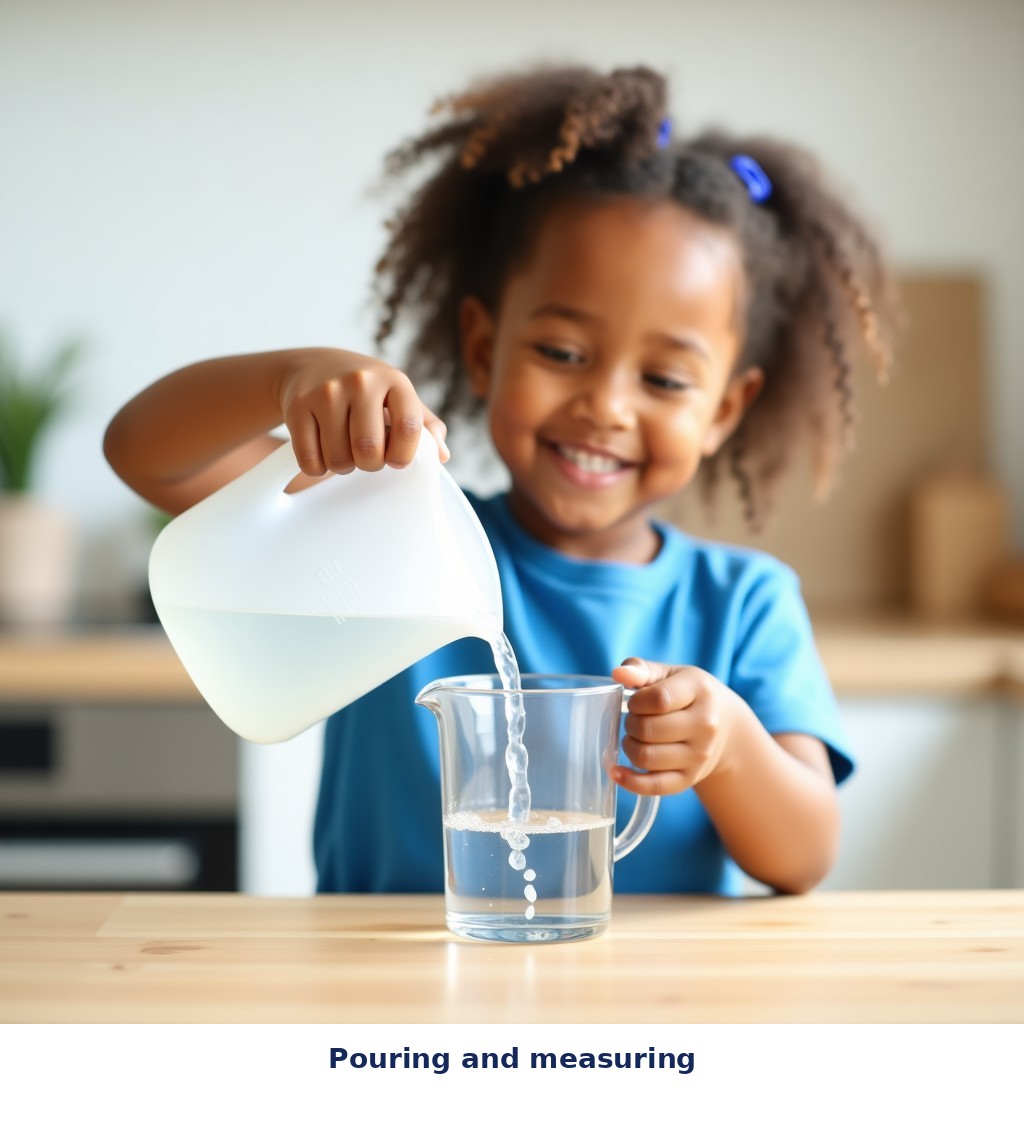
New picture: A child pouring water into a measuring jug. Everyday picture; it shows pouring, not the 750 mL bottle or 5 kg rice bag examples in the text.
Key Terms
- Balance — A tool with two pans for comparing weights.
- Weighing scale — A tool that shows the weight of something.
- Weight — How heavy something is, measured in grams or kilograms.
- Measuring jug — A container with marks for measuring liquids.
- Estimate — A sensible guess before measuring exactly.
Remember
- A balance is level when both sides weigh the same.
- 1 kg = 1,000 g. 1 litre = 1,000 mL.
- Read a liquid jug with your eyes level with the liquid.
- Estimate first, then measure — and compare.
Exam Tip / Common Mistake
Common mistake: mixing up grams and kilograms. A school bag is about 4 kg, not 4 g! Always ask: is this light (grams) or heavy (kilograms)?
Practice set — try it yourself
- A bag of sugar weighs 2 kg. Mother uses 750 g. How much is left, in grams?
Hint: Hint: First write 2 kg in grams. - A jug has 1 litre 250 mL of juice. How many millilitres is that?
Hint: Hint: 1 litre = 1,000 mL. - Two books weigh 600 g and 900 g. What is their total weight in kilograms and grams?
Hint: Hint: Add in grams first, then convert. - A bucket holds 8 litres. How many 2-litre jugs can fill it?
Hint: Hint: 8 ÷ 2 = ? - Estimate: is a watermelon closer to 3 kg or 300 g? Explain your guess.
Hint: Hint: Can you lift it with one finger?