

Read, Think and Enjoy 5: Letter to Martha
Original notes — ready Bihar Board — BSEB • Class 11 • English • Book: Rainbow Bhag-1 (Purani pustak — 2025 se pehle wali)
Letter to Martha — EG's own notes, in simple English
Book: Rainbow Bhag-1 (Purani pustak — 2025 se pehle wali) (BSEB, Class 11) | Read, Think and Enjoy 5 | Type: Prose (Read, Think and Enjoy)
This page carries Educational Galaxy's own original notes — a theme-level summary in simple English, not a copy of the textbook. No official textbook PDF is given here.
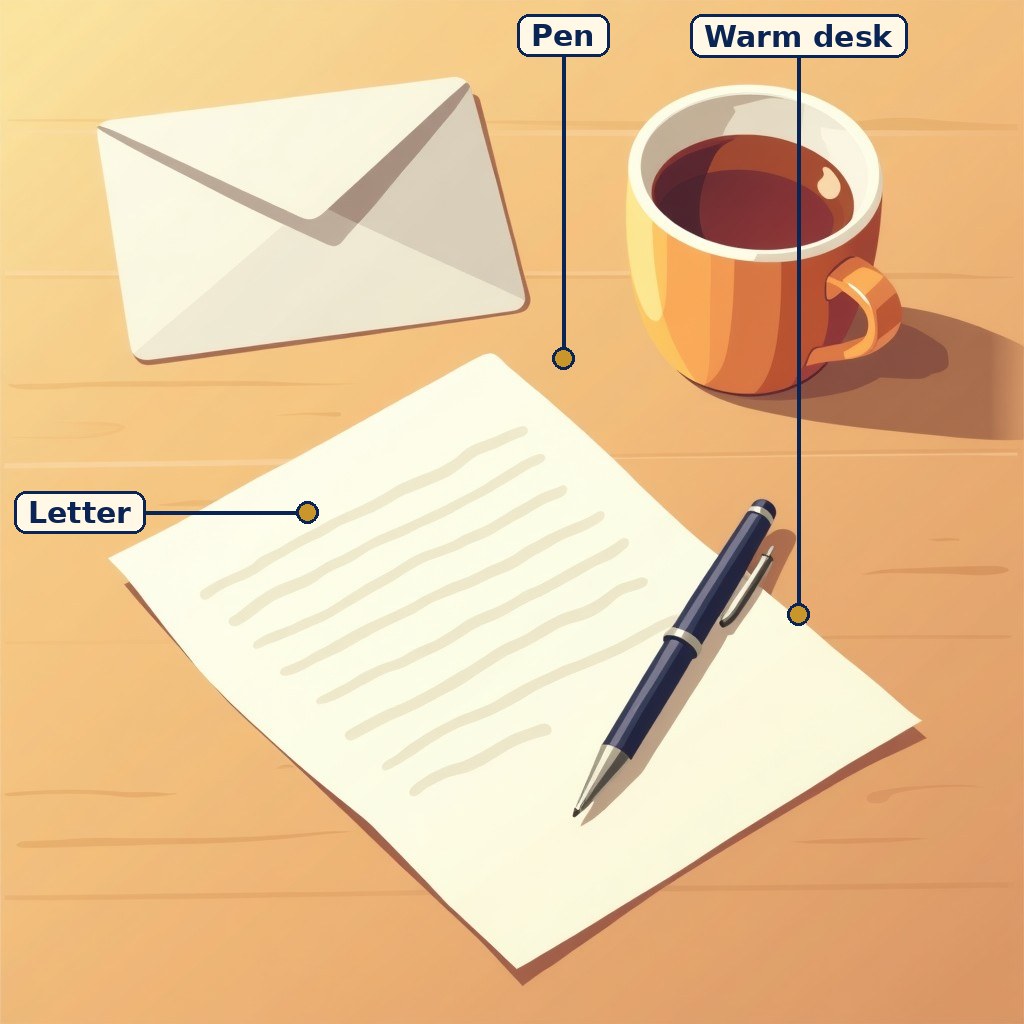
Diagram (labels are printed on the image): A letter on a desk with a pen — a general picture of personal writing, not a book scene.

Friends talking on a bench — a general picture of friendship letters build.
What the chapter is about
In this letter, the writer speaks warmly and honestly to Martha about life, work and human feeling. A letter, unlike a formal essay, allows a person to think aloud — to share doubts, memories and hopes with a trusted friend.
The lesson shows the value of personal writing: it builds friendship, clears the mind and preserves feelings that formal writing cannot hold. Writing a good letter is itself an art — sincere, simple and human.
What you should learn
A sincere personal letter builds friendship and clears the mind like nothing formal can.
Key Terms
- Letter — A personal written message.
- Sincere — Honest and true in feeling.
- Friendship — Close, trusting affection.
- Memory — Remembered past feelings and events.
- Art — Skilled, beautiful expression.
Remember
- The writer addresses Martha warmly and honestly.
- A letter lets a person think aloud to a friend.
- It shares doubts, memories and hopes.
- Personal writing builds friendship.
- A good letter is sincere, simple and human.
Exam Tip / Common Mistake
Common mistake: summarising the letter's news only. The lesson is about LETTER-WRITING itself — sincerity and friendship.
Chart / Table
| Point | Detail |
|---|---|
| Letter's tone | Warm, honest, personal |
| Letter's gift | Friendship and clear thought |
| Formal writing | Rules, distance, coldness |
| Good letter | Sincere, simple, human |
Practice set (try on your own)
- Who is the letter written to?
Hint: Think about Martha. - How is a letter different from a formal essay?
Hint: Think about thinking aloud to a friend. - What does the writer share in the letter?
Hint: Think about doubts, memories and hopes. - How does letter-writing build friendship?
Hint: Think about honest sharing. - What makes a letter good?
Hint: Think about sincerity and simplicity.
Questions with Answers
- What is Letter to Martha?
A warm, personal letter in which the writer shares thoughts, memories and feelings honestly with a trusted friend, Martha. - How does a letter differ from formal writing?
A letter is personal and free: it thinks aloud, admits doubt and speaks from the heart, while formal writing keeps distance and follows rules. - Why is letter-writing valuable?
It builds friendship, clears the writer's mind, and preserves feelings that official or formal writing cannot hold. - What qualities make a good letter?
Sincerity, simplicity and humanity — writing as one speaks to a friend, without show or pretence. - What should students learn from this lesson?
To write honestly and simply, and to keep the habit of personal letters: they strengthen friendships for life.
How to use this page: First read the summary, say the key terms in your own words, then try the practice set without looking. Finally check yourself with the questions and answers. Get your answers checked by your teacher or parents.