

Read, Think and Enjoy 3: Unemployed Hope
Original notes — ready Bihar Board — BSEB • Class 11 • English • Book: Rainbow Bhag-1 (Purani pustak — 2025 se pehle wali)
Unemployed Hope — EG's own notes, in simple English
Book: Rainbow Bhag-1 (Purani pustak — 2025 se pehle wali) (BSEB, Class 11) | Read, Think and Enjoy 3 | Type: Poetry (Read, Think and Enjoy) | Author: Umeshwar Prasad
This page carries Educational Galaxy's own original notes — a theme-level summary in simple English, not a copy of the textbook. No official textbook PDF is given here.
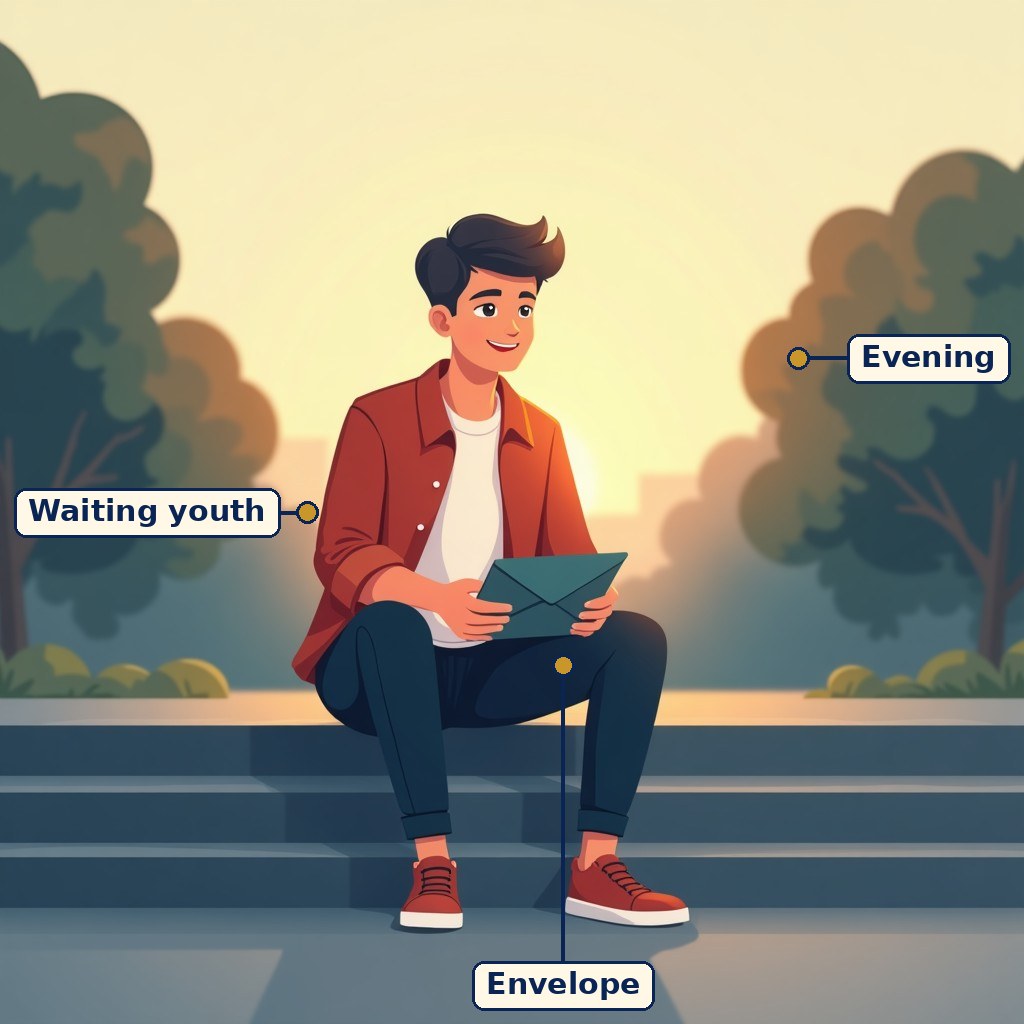
Diagram (labels are printed on the image): A young man waiting alone at evening — a general picture of unemployed hope, not a book scene.

Old parents outside a small house — a general picture of a family sharing unfulfilled hopes.
What the chapter is about
A young man waits four years for a job, and his hopes slowly turn to pain. He dreams of buying his father a fine dhoti and kurta, of a salary that feels like a fairy gift — but the job never comes, and his mother dies with her wishes unfulfilled.
The poem speaks for educated unemployed youth. It shows how joblessness wounds not only the young man but his whole family: parents' dreams die with their hopes. It is a quiet, bitter protest against a system that gives degrees but no work.
What you should learn
Unemployment wounds a whole family: parents' dreams die with their children's hopes.
Key Terms
- Unemployed — Without a job although willing to work.
- Hope — Expectation of something good.
- Frustration — Anger and sadness when hopes fail.
- Salary — Regular pay for work.
- Democracy — Here, a system that should provide for all.
Remember
- The speaker waits four years without a job.
- He dreams of buying his father fine clothes.
- His mother dies with her wishes unfulfilled.
- Joblessness wounds the whole family.
- The poem protests a system giving degrees, not work.
Exam Tip / Common Mistake
Common mistake: calling it only a sad poem. It is a SOCIAL protest about educated unemployment.
Chart / Table
| Point | Detail |
|---|---|
| The wait | Four years, no job |
| The dream | Gifts for father, a salary |
| The loss | Mother dies, wishes unfulfilled |
| The protest | Degrees without work |
Practice set (try on your own)
- How long does the speaker wait for a job?
Hint: Think about four years. - What does he dream of buying his father?
Hint: Think about a dhoti and kurta. - What is a 'fairy salary'?
Hint: Think about a dream salary. - What happens to his mother?
Hint: Think about unfulfilled wishes. - Who else suffers from his unemployment?
Hint: Think about the whole family.
Questions with Answers
- What is the poem about?
An educated young man who waits four years for a job. His hopes — a salary, gifts for his father — never come true, and his family suffers with him. - What did he dream of buying his father?
A Maharaja dhoti and a silken kurta, the fine clothes his father cherished from his wedding. The dream lapses because no job comes. - How does unemployment hurt his mother?
She shares his dreams and dies with her wishes unfulfilled, her voice weak and her eyes full of pain. Her death deepens his grief. - Why does he call democracy 'unproviding'?
Because the system educated him but provides no work. His degrees do not feed his family or fulfil a single hope. - What is the poem's wider message?
That unemployment is not one person's failure. It wounds families and wastes a generation, and society must answer for it.
How to use this page: First read the summary, say the key terms in your own words, then try the practice set without looking. Finally check yourself with the questions and answers. Get your answers checked by your teacher or parents.