

Read, Think and Enjoy 2: Stonemasons, My Father and Me
Original notes — ready Bihar Board — BSEB • Class 11 • English • Book: Rainbow Bhag-1 (Purani pustak — 2025 se pehle wali)
Stonemasons, My Father and Me — EG's own notes, in simple English
Book: Rainbow Bhag-1 (Purani pustak — 2025 se pehle wali) (BSEB, Class 11) | Read, Think and Enjoy 2 | Type: Poetry (Read, Think and Enjoy) | Author: Namdeo Dhasal
This page carries Educational Galaxy's own original notes — a theme-level summary in simple English, not a copy of the textbook. No official textbook PDF is given here.
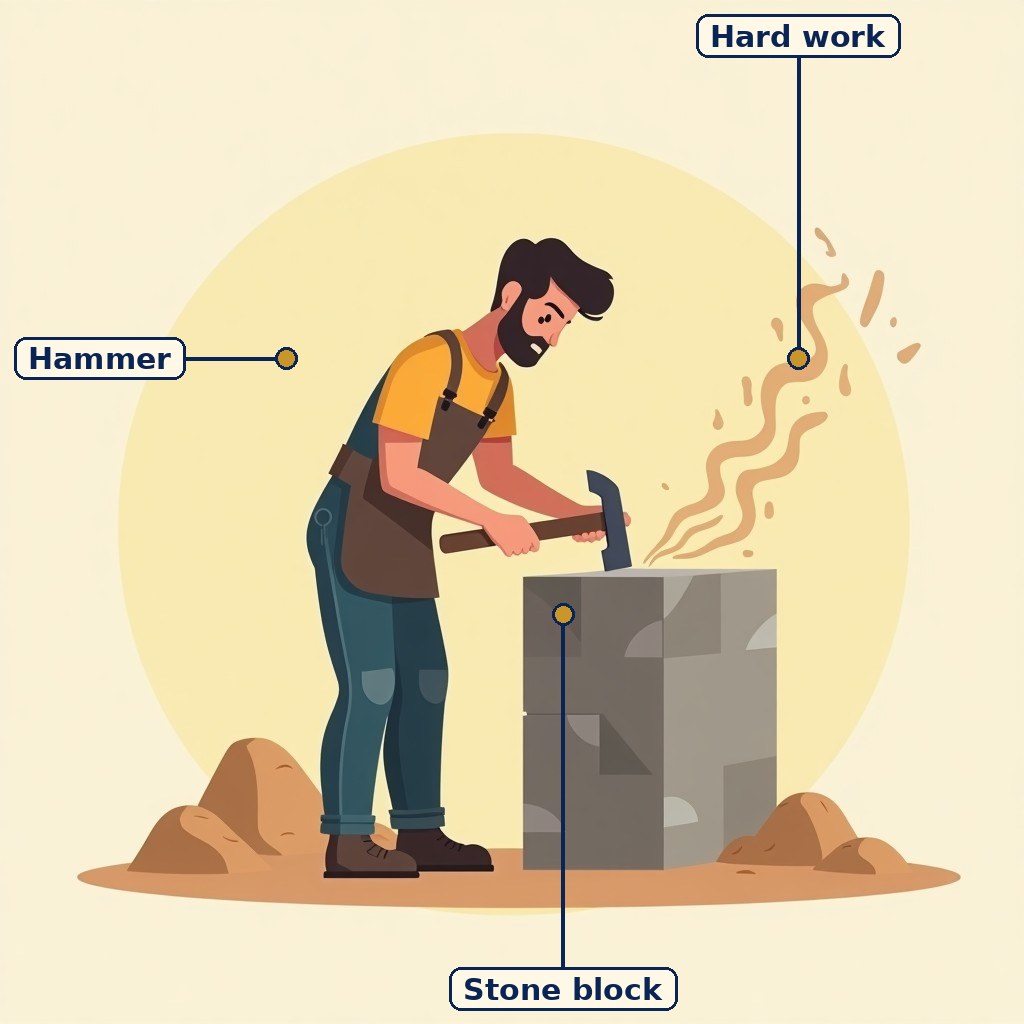
Diagram (labels are printed on the image): A mason shaping stone — a general picture of hard stone work, not a book scene.

A stone house in a lane — a general picture of what labourers' hands build.
What the chapter is about
The poet remembers his father, a stonemason, and the hard life of stone workers. Stones are cut, carried and shaped by hands that bleed, yet the workers' dreams are built into the houses of others. The poem's images are raw and powerful.
It is also a son's tribute and protest: his father gave his strength to stone, and the son now carries that memory in his own body and words. Labour deserves honour, and the labourer's child must not forget where he came from.
What you should learn
Honour the hands that build: labourers' dreams live in the stones they cut.
Key Terms
- Stonemason — A worker who cuts and shapes stone.
- Labour — Hard physical work.
- Tribute — An act showing respect and thanks.
- Protest — Strong objection to unfair treatment.
- Memory — What is remembered of the past.
Remember
- The poet's father was a stonemason.
- Stone work is hard: cutting, carrying, shaping.
- Workers' dreams go into others' houses.
- The son carries his father's memory.
- The poem honours labour and protests neglect.
Exam Tip / Common Mistake
Common mistake: reading it as only a description of stone work. It is a SON'S tribute and a protest for labourers.
Chart / Table
| Point | Detail |
|---|---|
| The father | Stonemason, hard life |
| The stones | Cut by bleeding hands |
| The houses | Built for others |
| The son | Carries memory in words |
Practice set (try on your own)
- Who was the poet's father?
Hint: Think about a stonemason. - What work do stonemasons do?
Hint: Think about cutting and shaping stone. - What happens to the workers' dreams?
Hint: Think about houses built for others. - How does the son carry his father?
Hint: Think about memory and words. - What does the poem demand for labourers?
Hint: Think about honour.
Questions with Answers
- What is the poem about?
It is about the poet's father, a stonemason, and the hard, painful life of stone workers whose labour builds houses for others. - Why are the images raw and strong?
Because stone work is raw: bleeding hands, heavy stones, dust and sweat. The poet does not soften the workers' suffering. - How is the poem a tribute?
The son honours his father by remembering him in poetry. His father's strength and pain live on in the son's body and words. - How is it a protest?
It shows that labourers give their dreams and health to build others' comfort, yet remain poor and forgotten. That injustice is the protest. - What should readers learn?
To honour manual labour and remember the workers behind every building. Dignity belongs to the hands that build.
How to use this page: First read the summary, say the key terms in your own words, then try the practice set without looking. Finally check yourself with the questions and answers. Get your answers checked by your teacher or parents.